In the 2026 gaming landscape, Projectile Count has evolved from a simple physics term into a core systemic lever that defines entire metas. It is the primary DPS scalar in survival roguelikes like Megabonk, the critical balancing dial for shotguns and multi-hit abilities in Marvel Rivals, and a deeply constrained mathematical variable in action RPGs like Path of Exile 2. This guide delivers an expert-level technical breakdown of what Projectile Count actually means in the context of modern game development and high-level competitive play, bypassing beginner definitions to focus on its statistical power, mechanical nuance, and server-side cost.
The Foundation: Projectile Count as a Game Object
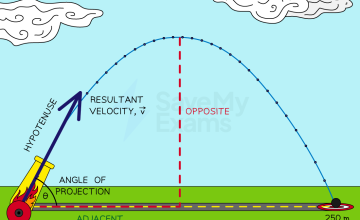
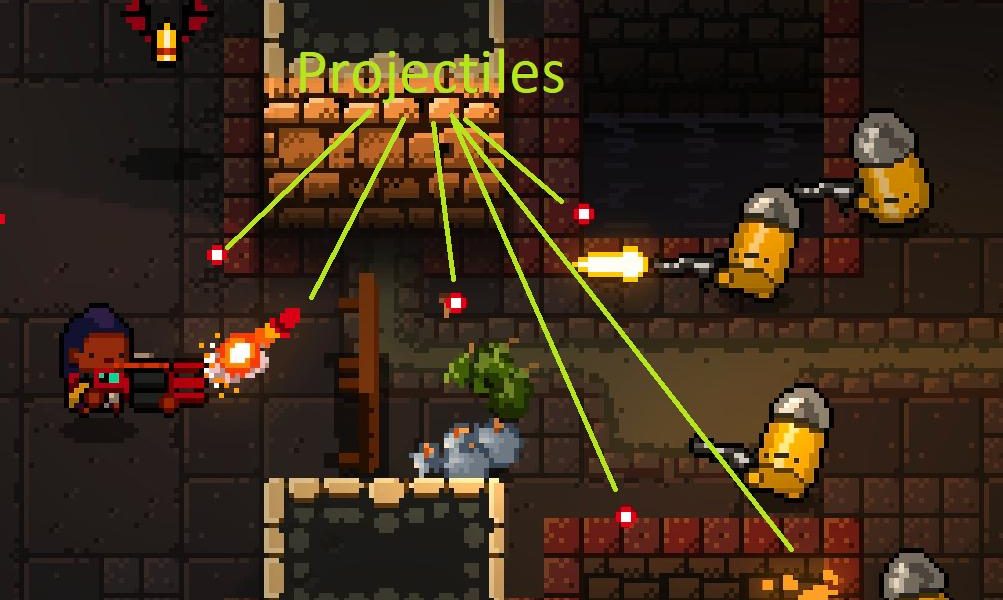
Before it is a stat, a projectile is an entity. In game development, a projectile is a discrete game object spawned by a source (a weapon, an ability). It moves through the game world at a set projectile speed or velocity, interacts with physics and collision volumes, and applies an effect upon contact.
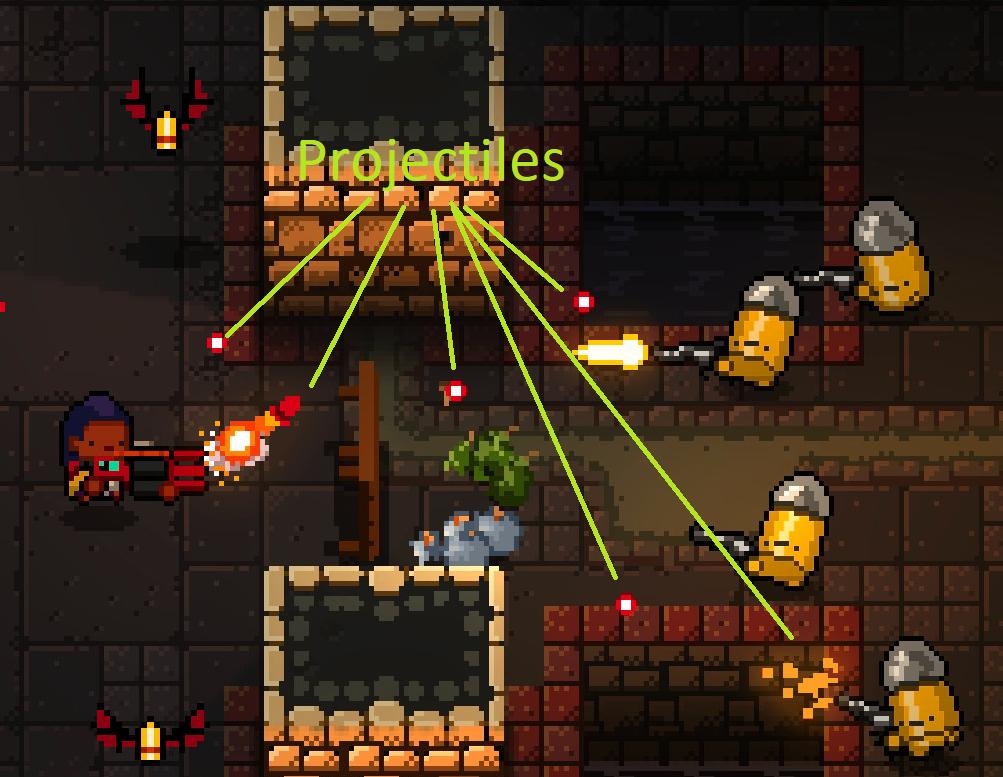
Figure: Standard representation of projectiles as tracked entities in a game engine environment.
The Game Development Stack Exchange (2019) formalizes this definition: a projectile is a small game object spawned by another object, moves along a predictable projectile trajectory, and is destroyed upon successful collision detection. This entity model is the baseline for everything that follows.
Hitscan vs. True Projectiles
The first major branching point in understanding Projectile Count is the distinction between Hitscan and True Projectile weapons. As highlighted in the Aimlabs Academy analysis from April 2026, hitscan weapons register damage instantly along a ray. There is no object traveling through the world. True projectiles, conversely, create a dynamic entity.
“When you fire, the game creates an actual object… and sends it traveling through the game world at a set speed.” — Aimlabs Academy, 2026
This distinction is crucial for Projectile Count. A hitscan weapon technically has a projectile count of 1 (a single ray trace). True projectiles, however, require the game engine to track each individual object. Increasing the Projectile Count stat on a true projectile weapon directly increases the number of objects the physics engine must simulate.
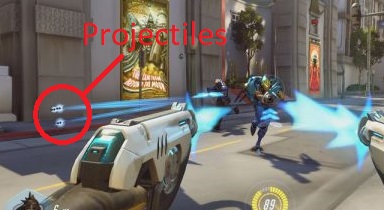
Figure: The visual distinction between a hitscan trace and a distinct projectile object in a 3D competitive environment.
Why the Distinction Matters in 2026
This distinction dictates the entire training regime for professional esports players. Using a tool like Aimlabs, a player can toggle a “projected aim indicator” to visualize the lead required for a specific projectile speed and anticipate its trajectory. This creates a direct feedback loop for the player’s brain to adjust to the specific Projectile Count data field of the weapon. A weapon with a projectile count of 1 and a slow speed (e.g., a grenade launcher) requires fundamentally different muscle memory than a weapon with a high speed but low projectile spread. The Aiming.Pro research correctly notes that this modern bifurcation exists to balance skill ceilings. A Sniper Rifle that requires perfectly leading a projectile has a higher skill cost, even if the numerical projectile count is just 1.
Projectile Count as a Core Stat: The Instance Multiplier
In titles like Megabonk and Path of Exile 2, Projectile Count is less about physical travel and entirely about damage calculation and instance multiplication. This is where the term solidifies into a specific, quantifiable statistic that drives entire character builds.
The Megabonk Scaling Model
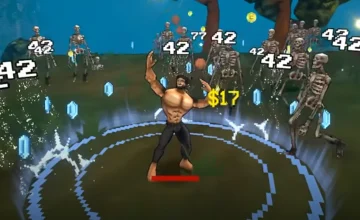
In Megabonk, the Quantity Tome explicitly governs Projectile Count. According to community-validated data aggregated by Amiibo Doctor and Destructoid, the base upgrade adds +1 projectile per level. This turns a linear stat into an explosive DPS multiplier when combined with on-hit effects, showcasing robust scaling mechanics.
- Base (Level 0): 1 Projectile.
- Level 10: 11 Projectiles (~11x damage output).
- Level 50: 51 Projectiles.
- Level 75: 76 Projectiles.
- Max (Level 99): ~100 Projectiles (estimated 100x damage output).
The genius of this design is its raw amplification. Unlike Area of Effect (AoE), which suffers from diminishing returns if a map is too small, Projectile Count in Megabonk offers a pure, mathematically robust damage escalation. However, Rarity scaling adds complexity. Legendary upgrades provide +2 projectiles per level, compared to Common rarity’s +1. This creates a significant power spike for high-level players.
The Path of Exile 2 Constraint: Group Targeting Logic
Path of Exile 2 provides a contrasting design philosophy regarding Projectile Count. The game allows massive amounts of projectiles through support gems and passives. However, it introduces a critical balancing mechanic found in the PoE2 Wiki:
“When a group of multiple Projectiles is fired from the same source at the same time, only one Projectile in the group can hit each target unless otherwise specified.” — Path of Exile 2 Wiki
This single sentence represents one of the most profound design decisions regarding Projectile Count. It prevents the classic “Shotgun” boss-killing meta that plagued many early ARPGs, forcing players to consider the spread pattern of their abilities. A player with 20 projectiles firing at a single enemy will only register one hit if no other modifiers are present. This forces deep synergy hunting: players must pair high Projectile Count with Area of Effect (to overlap hitboxes), Chain (to spread to other targets), or Returning Projectiles (to give a second chance for a hit). This bifurcation—Megabonk’s 100x saturation versus PoE2’s tight algorithmic cap—represents the two poles of projectile count theory in 2026.
Additive vs. Contextual Scaling
How does the stat apply to different weapon types? Research from Amiibo Doctor clarifies that in games like Megabonk, bonuses to Projectile Count are additive to the character. If a character has a base +3 projectile count from a passive, every single weapon they wield benefits from that base value equally.
However, this interactivity has strict limits. As confirmed by the Megabonk Steam community discussions from September 2025, certain weapon types are explicitly excluded from the scaling formula. The Aura weapon, for example, does not benefit from Projectile Count at all. This is a deliberate design wall to prevent infinite scaling loops and to force players to carefully weigh their stat investments against weapon tags, adding significant strategic depth to character building.
The Art and Feel: The Psychology of the Multi-Proj
Why is Projectile Count such a universally satisfying mechanic? It engages a primal psychological loop of power fantasy and screen dominance.
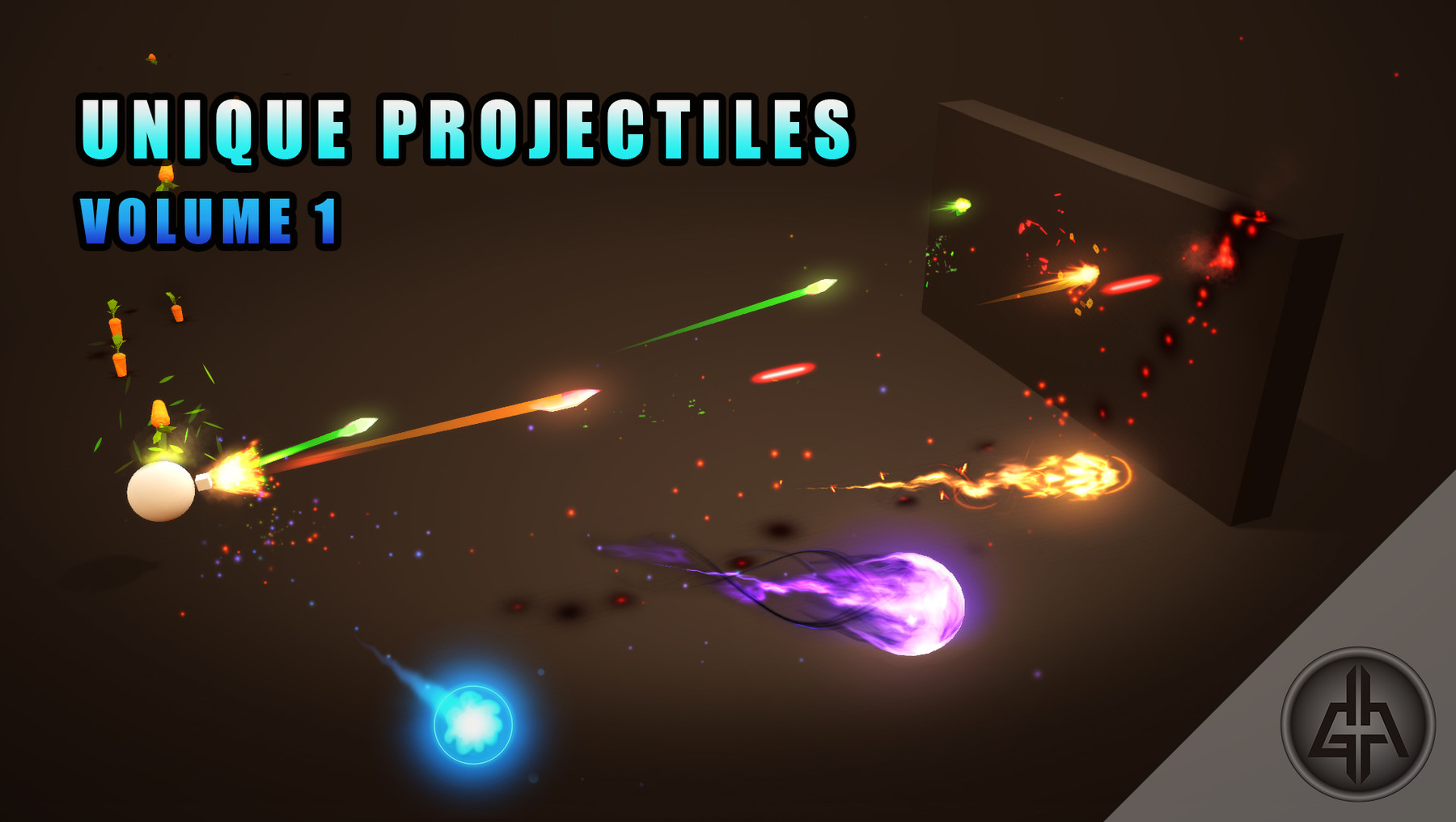
Figure: An asset pack demonstrating the high artistic investment in projectile effects for modern games.
- Screen Coverage: The player feels geometrically dominant over the play field. High projectile counts turn a single-target weapon into a crowd-clearing tool, sometimes bordering on a bullet hell experience.
- Feedback Density: The feedback is amplified by sheer visual noise. Every projectile that hits delivers a dopamine hit via hit-markers, damage numbers, and particle effects.
- Synergy Hunting: A high Projectile Count allows for insane synergy with on-hit effects, critical strikes, and status effects. This creates a goal-oriented loop where the player optimizes their entire build around the premise of “more things flying out of my gun.”
The game design community validates a core psychological truth here: projectiles feel more satisfying to land. This is why even in games where the code is strictly hitscan, developers often add a visual projectile to the game world for feedback. The animation of the bullet traveling provides the dopamine hit. As noted in the Megabonk guides, even when there are “visual display limitations,” the damage still applies. The engine may stop rendering the sprites, but the math keeps working. This separates the stat from the art.
Technical Implementation in 2026
Server Bandwidth and Determinism
In a competitive FPS environment like Marvel Rivals or Battlefield 6, Projectile Count directly impacts server load and latency stability. Client-side prediction and server-side reconciliation must handle the projectile trajectory of every individual object. This is why many competitive shooters still favor hitscan for primary weapons, reserving high projectile counts for specific, high-cooldown ultimate abilities where the bandwidth cost and overall resource management is acceptable.
The Performance Budget of VFX
Each projectile requires a trail, a hit effect, and a sound cue. Game artists and engineers must set a strict “budget” for how many projectiles can be on screen before the engine begins to cull or simplify effects, a key aspect of game engine optimization. The 2026 roguelike boom has forced developers to become very clever with how they display damage. Using highly readable but computationally cheap sprites (as seen in indie hits) over expensive 3D meshes is a common trade-off to support the high Projectile Count stat ceiling demanded by endgame builds.
Group Targeting and Hit Registration
The group targeting rule from Path of Exile 2 solves a specific technical problem: overlapping hits. If ten projectiles hit a single enemy simultaneously, the server must process ten separate hit events. Without a cap, this creates “damage stacking” bugs and animation glitches, making robust collision detection crucial. By limiting the group to one hit per target, the developers ensure that the server load remains predictable and that combat feels visually clean, even when the numerical Projectile Count is astronomically high.
Frequently Asked Questions
1. Is Projectile Count the same as Attack Speed?
No. Attack speed governs the rate of fire. Projectile Count governs the number of entities produced per activation. The total damage calculation or DPS formula is often expressed as Total DPS = Damage × Projectile Count × Attack Speed. Neglecting one of these multipliers significantly impacts build efficiency.
2. Does Projectile Count affect shotguns in competitive shooters?
In hitscan shooters, the “projectiles” of a shotgun are simulated rays. The game object count is zero, but the statistical count is simulated by the spread pattern. In games that use true projectiles for shotguns, increasing the Projectile Count stat literally adds more bullet entities to the spread pattern, widening the spread and increasing the potential for damage saturation.
3. Why do roguelikes rely so heavily on Projectile Count scaling?
It provides a satisfying, transformative upgrade path that changes how a weapon feels. It scales damage without relying solely on raw damage numbers, and it dramatically improves screen coverage, which is critical for the horde survival gameplay loop.
4. Can high Projectile Count cause server lag?
Absolutely. Every projectile represents a collision check and a network state. This is why games implement strict targeting logic (like PoE2’s group cap) or visual culling to prevent engine crashes. The server must uniquely identify each projectile to reconcile hits.
5. What is the difference between Projectile Count and Multishot?
They are functionally synonymous in the context of statistics. “Multishot” is the applied term for a Projectile Count greater than 1 on a weapon that usually fires a single shot. The terminology varies by genre, but the underlying mechanic is identical.
Conclusion
Projectile Count in 2026 is more than just a number on a character sheet. It is the intersection of game physics, RPG character building, visual feedback engineering, and multiplayer server architecture. It acts as a balancing lever that can make a weapon feel overwhelmingly powerful (Megabonk’s 100x DPS amplification through its scaling mechanics) or require deep technical mastery to maximize (PoE2’s group targeting and Area of Effect requirements, adding strategic depth).
As AI-driven dynamic projectile systems emerge—where engines spawn fewer projectiles against a single target and more against a group—the definition of this stat will continue to evolve. For now, understanding the dual nature of Projectile Count—as both an entity in the game world and a statistical multiplier in the backend—is the key to mastering virtually every action game and competitive shooter on the market.
References
- Aimlabs Academy — “Hitscan vs Projectile: Understanding How Your Aim is Impacted”, April 2026
- Amiibo Doctor — “Megabonk’s Stat Calcs Explained”, October 2025
- Path of Exile 2 Wiki (Grinding Gear Games) — “Projectile”, 2024–2025
- Destructoid — “Quantity Tome (Projectile Count) Guide”, September 2025
- Game Development Stack Exchange — Community Discussion on Projectile Definition, August 2019
- Aiming.Pro — “Hit Scan vs. Projectiles in FPS Games”, September 2018
- Megabonk Steam Community — General Discussion on Projectile Count Interactions, September 2025