You are deep in a run of Megabonk. The screen is a hurricane of chaos. A level up prompt appears: +20% Attack Damage or +1 Projectile. A new player might grab the raw number without thinking. A veteran picks the projectile without blinking.
Why? Because “Projectile Count” isn’t just a stat on a tooltip. It’s a fundamental game mechanic that governs damage, accuracy, status effects, and screen control across almost every genre. Whether you are dueling in Valorant, crafting a build in Path of Exile 2, or swapping weapons in Destiny 2, understanding this single number can double or triple your effective power and overall damage output.
In the ever-refined game balance landscape of 2026, the difference between a winning build and a mediocre one often comes down to one question: “How many objects am I throwing at the enemy?”
So, what is projectile count in games, why has it become the most important scaling number in modern gaming, and when should you actually avoid it? Let’s break it down from the engine level to the competitive meta.
What Makes a Projectile? Hitscan vs. Travel Time
Before we talk about count, we have to define what a projectile actually is in a game engine.
As the Game Development Stack Exchange perfectly summarizes, a projectile is usually “a small game object which is spawned by another object, moves in a predictable path, is destroyed if it collides with a solid object and causes damage.” This destruction is handled by collision detection systems, which determine interactions with the game world. This is the classic model. Think of a bullet in Halo, an arrow in The Legend of Zelda, or a rocket in Team Fortress 2.
The Two Pillars of Shooting
The most important distinction in game design is the split between Hitscan and Projectile.
- Hitscan: The instant you pull the trigger, the game calculates a ray in a straight line. Whatever that ray hits is instantly damaged. Travel time is zero. (Examples: Valorant‘s Vandal, Overwatch 2‘s Widowmaker).
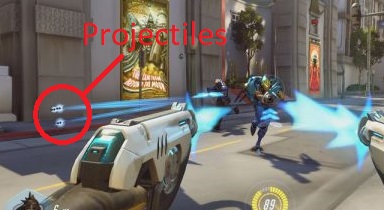
- Projectile: The weapon spawns a physical object with position, velocity, and mass. It travels over time through the game environment at a specific projectile speed. You must lead the target and account for physics. (Examples: Valorant‘s Shorty, Overwatch 2‘s Hanzo).
So, in the context of these definitions, what is projectile count in games? It is the integer number of these independent damage-dealing objects created by a single attack action.
- A Sniper Shot: Count = 1
- A Burst Rifle: Count = 3
- A Standard Shotgun: Count = 5 to 12
- A Scatter Spell: Count = 8
The Overwatch Wiki puts it perfectly: “Projectiles are emitted entities that travel in the air, separate from the user. While hitscan weapons and abilities fire projectiles that have no travel time, travelling instantly to the target. On the other hand, the term ‘projectile’ is commonly only used when there is travel time involved.”
In game engines like Unity, every pellet in a shotgun shell is often a separate rigidbody object. Managing this count is a core part of game performance and feel.
The Math of Destruction: Why Projectile Count Scales Like Crazy
This is the “why.” Why do game designers use this number to create massive power spikes, and why is understanding what is projectile count in games so crucial for the best players who hunt for multi-shot mods above all else?
The Linear Base
At its most basic level, projectile count is a linear DPS multiplier.
- Base Damage per Projectile: 10
- Fire Rate: 1 attack per second
- Projectile Count: 5
- Total DPS: 50
Double the count to 10, and the DPS jumps to 100. Simple.
The Exponential Secret: On-Hit Effects
The linear scaling is fine, but the true power of projectile count is discovered when you introduce on-hit effects. Almost every modern game has items or skills that trigger “on hit” or “on damage.” This is life steal, poison, burning, freezing, or stacking a debuff, often leading to powerful crowd control (CC) effects.
- A weapon with Count 1 and 20% chance to poison: 20% chance per attack.
- A weapon with Count 5 and 20% chance to poison per hit: The chance to apply poison per attack is
1 - (0.80^5)= 67.2%. - A weapon with Count 10: The chance to apply poison per attack is
1 - (0.80^10)= 89.3%.
You can see why this is devastating. This math is why the Quantity Tome in Megabonk is considered a mandatory pickup. As the fan guides note, “By multiplying the number of projectiles or attacks, it can dramatically increase DPS and screen coverage.” It doesn’t just add damage—it multiplies your consistency.
Critical Hit Fishing
The same logic applies to critical hits. Rolling 8 small chances to crit per attack is statistically superior to rolling 1 large chance. It reduces the variance of bad luck and ensures your damage is consistent against groups of enemies.
Status Effect Stacking
Some games allow an unlimited number of status stacks. In Path of Exile 2 or Last Epoch, a single skill that fires 10 projectiles can inflict 10 stacks of a bleed or ignite instantly. A skill that fires one projectile can only inflict one stack per second. In this context, projectile count defines the ceiling of your entire build, significantly impacting build diversity and strategic choices.
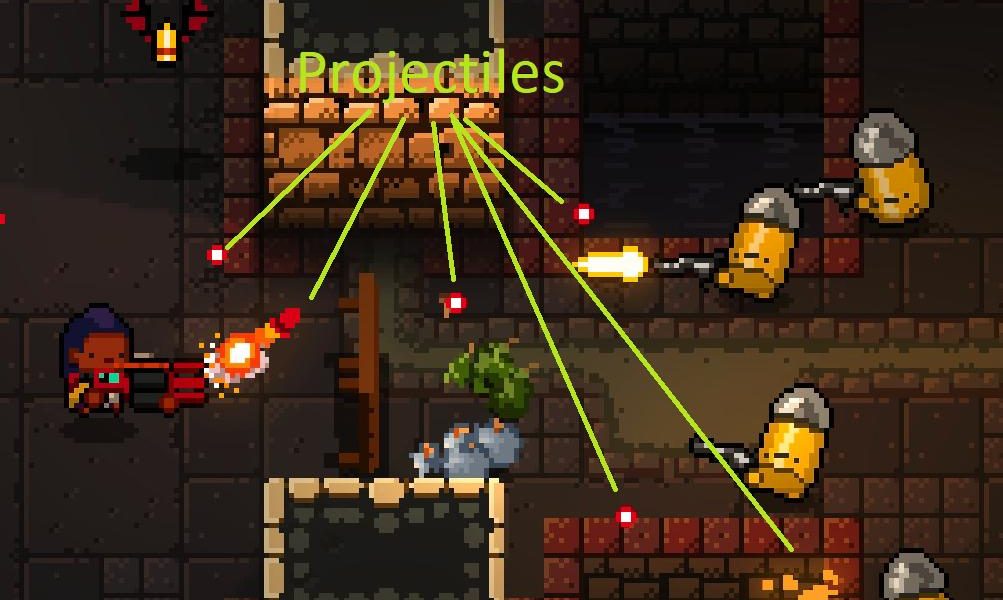
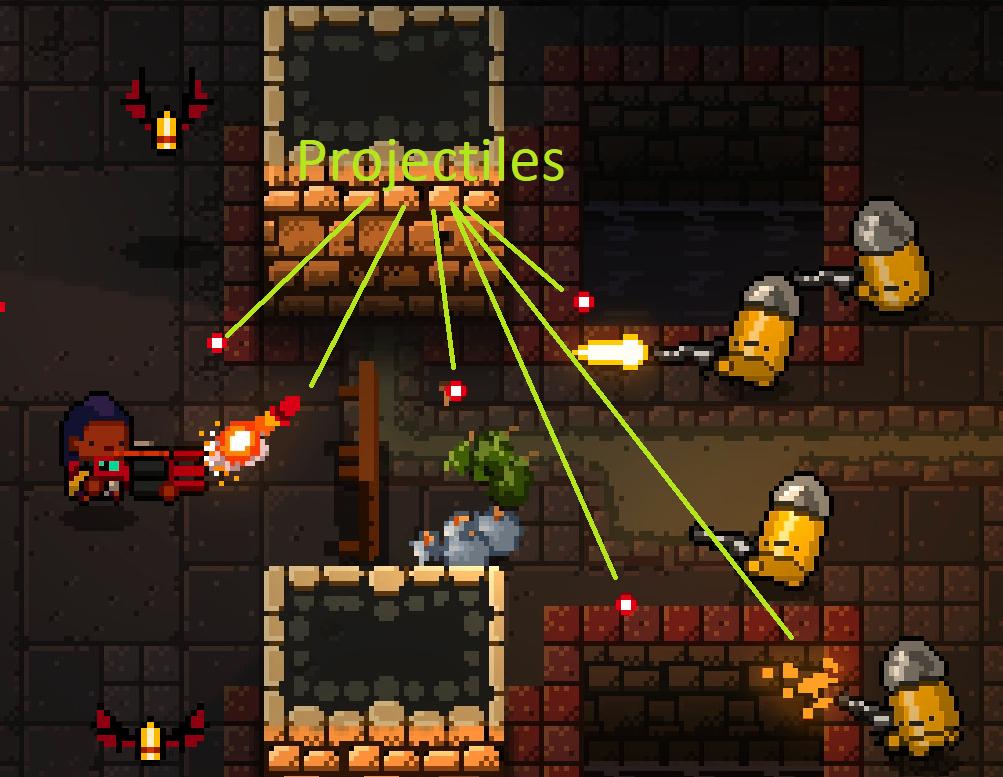
Visualizing trajectories. Each line is a separate damage calculation and collision check. The geometry of your spread pattern defines your effective range.
Projectile Count in the Wild: A Genre Breakdown for 2026
How does understanding what is projectile count in games define the metagame of current titles?
Roguelikes and Survivor-likes: The King Stat
Games like Megabonk, Vampire Survivors, and Halls of Torment have turned projectile count into the holy grail. The Quantity Tome is a perfect example. A community guide explicitly states it “is highly valued for projectile-based weapons.” Turning 2 fireballs into 8 fireballs dramatically increases your area of effect (AoE) coverage and clears a path through enemy swarms.
Pro Tip: In these games, damage often has a cap or a flat reduction against hordes. Spreading your damage across 10 projectiles is far more efficient than overkilling one enemy with a single giant number. Always check if your “Aura” or “Beam” abilities scale with projectile count—as the Megabonk forums point out, some specific abilities like the Aura weapon don't benefit, and knowing the difference is crucial.
First-Person Shooters: The Skill Ceiling
In competitive FPS games of 2026 (Valorant, Apex Legends, Marvel Rivals), projectile count defines distinct weapon archetypes and weapon identity.
Shotguns reward aggressive play with high burst. The spread increases with count, making it a gamble at medium range. A single projectile weapon like a sniper requires prediction and high player skill expression but offers unmatched precision. The difference between a slug shotgun (Count: 1) and a buckshot shotgun (Count: 8) is massive.
The Aiming.Pro article hits on this: “Hitscan vs Projectile: Understanding How Your Aim is Impacted.” They note that settings can overlay a projected aim indicator, which is only possible if the projectile speed and count are predictable. Players in 2026 who master this overlay are climbing the ranks faster.
ARPGs and Looter Shooters: The Build Enabler
In Path of Exile 2, a skill like Fireball is balanced around firing one projectile. A support gem that adds “+2 Projectiles” effectively triples your wave clear and single-target potential (assuming all hits connect).
In Destiny 2, the identity of an exotic shotgun is entirely defined by its pellet count. The Lord of Wolves fires a burst of 10 projectiles. The Chaperone fires a single slug. One is a room clearer, the other is a precision duelist.
MOBAs and Hero Shooters: The Playmaker
In League of Legends or Marvel Rivals, abilities with high projectile count are usually AoE control tools.
- Marvel Rivals Moon Knight fires an Ankh that bounces projectiles. The count of bounces dictates his kill potential.
- Overwatch 2‘s Genji secondary fire fires a spread of three shurikens. Correctly landing all three (managing the spread count) is the difference between a kill and a wound.
The Hidden Cost: When High Projectile Count Backfires
It sounds like more is always better. Is it? Good game design requires balance, and understanding what is projectile count in games also means knowing its downsides. Sometimes, a high projectile count is a trap.
The Spread Problem
More projectiles usually means more variance. A high count weapon is a shotgun blast. It is devastating up close but useless at range. You trade reliability for potential. In games like Fortnite or Call of Duty: Warzone, a tighter spread pattern is often considered a legendary perk because it removes this downside.
Enemy Armor and Damage Thresholds
Many games utilize armor that reduces the damage of each individual hit.
If an enemy has 50 armor:
- A single hit of 100 damage deals 50 damage.
- 10 hits of 10 damage are completely negated by the armor (0 damage).
This is a critical balance lever for game designers. They often make bosses tankier against high-count shotguns by using flat armor or damage gates, forcing players to switch to high-damage, low-count weapons.
Ammo Economy and Overkill
Ammo Economy and Overkill: Effective resource management is key. Firing 15 pellets into a zombie with 2 HP is a waste. Players who understand time-to-kill (TTK) will often prefer weapons with lower projectile counts for precise, economic kills against low-health enemies. This is the core of the “skill ceiling” mentioned in the gamedev Reddit thread, highlighting how projectile mechanics contribute to player skill expression: “Projectiles, from a gameplay standpoint, are more satisfying to land and require more skill.”
Performance and Desync
Let’s not forget the technical side. The PZwiki page updated in May 2026 provides a perfect real-world example. The fix for “ProjectileCount” in Project Zomboid shows how developers are constantly optimizing. Every projectile is a game object. In a massive zombie swarm or a 32-player lobby, multiplying projectile counts can tank server performance and introduce desync. You might see 12 pellets hit the enemy on your screen, but the server only registered 5.
Nuance with Specific Abilities
The Megabonk General Discussion thread notes: “Projectile count doesn’t seem to do anything for the Aura weapon in particular.” This is a vital lesson. Not every ability is a true “projectile” that scales with count. Some are beams, auras, or hitscan. Smart players know exactly which skills in their kit will benefit from various projectile modifiers like a multishot buff.
Mastering the Chaos: How to Train for Projectile Weapons
How can you leverage projectile count to get better at games in 2026?
Know Your Gun’s Identity
- High Count: Play close. Use chokepoints. Stack on-hit effects. Don’t worry about pixel-perfect accuracy.
- Low Count: Play range. Focus on headshots. Don’t spam. Every shot must count.
Aim Training is Genre-Specific
Aim trainers are more popular than ever. The Settings, Targets, projectile overlay feature discussed by Aiming.Pro is vital. It teaches you the exact lead time for specific projectile speeds.
Practice this: If your projectile count is high (e.g., a shotgun), you need less prediction—you can “spray and pray” in the enemy’s general direction. If your count is 1 (e.g., a sniper), you need perfect prediction for every shot.
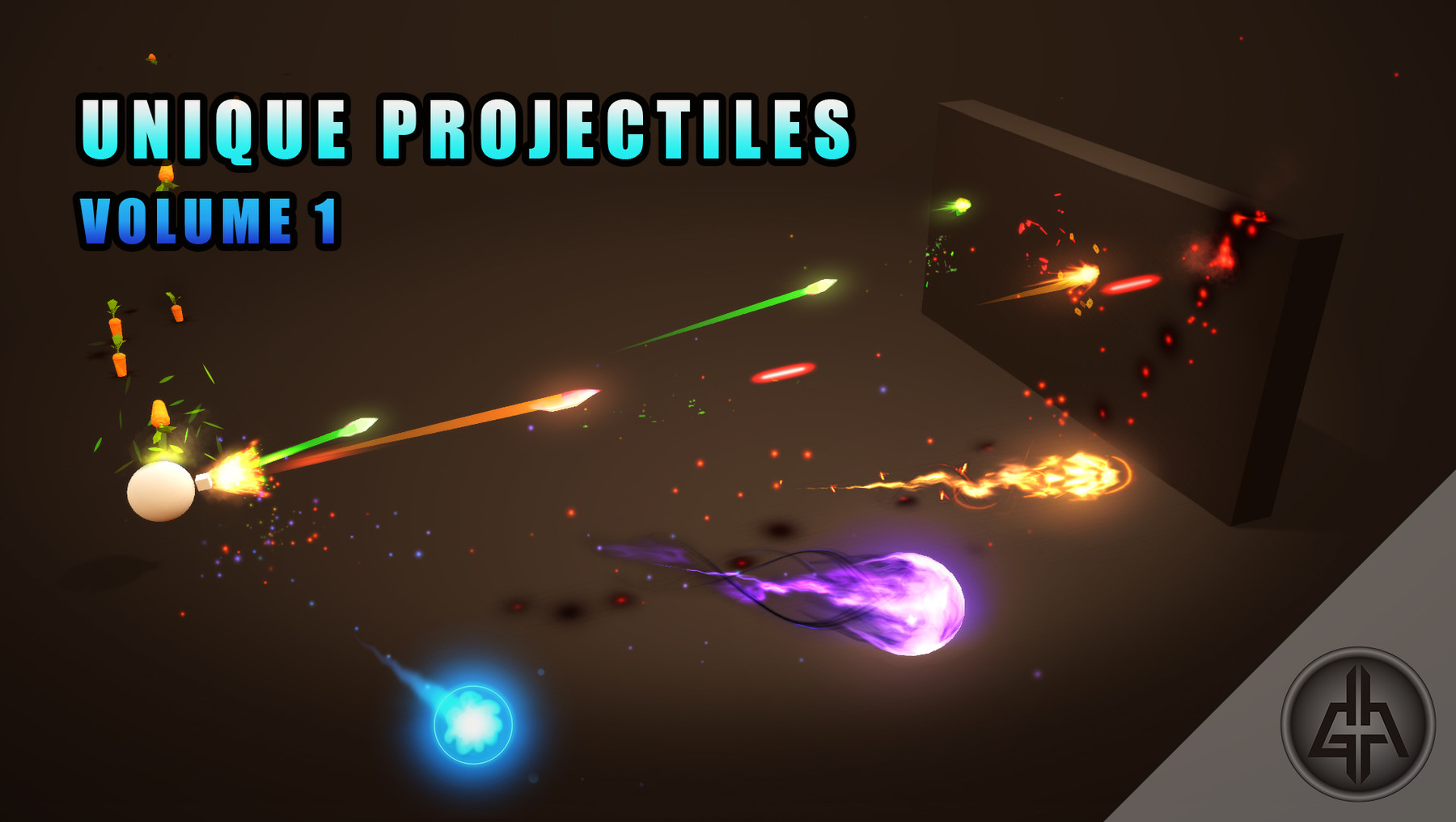
The visuals matter too. The ArtStation pack “Unique Projectiles Vol. 1” shows how developers are making high-count weapons feel amazing. The visual density of your shot is a reward for building into the stat—a single bullet is boring, but a screen full of glowing bolts is a dopamine hit.
The “Split” Mechanic
Some of the most satisfying skills are those where projectile count increases dynamically. As the Reddit gamedev thread mentions, you can do “projectiles that split into smaller projectiles.” A sniper shot that splits into 5 mini-seeking missiles on impact completely changes the stat from a static number to a dynamic damage curve.
The Future of Projectile Count: AI and Physics
What trends are defining projectile count in game development for the rest of 2026?
AI-Driven Patterns
Instead of a fixed static cone, modern games are experimenting with algorithmic spreads. A high projectile count weapon might fire in a spiral, a wave, or a pattern that intelligently avoids hitting the same pixel twice. Enemy AI is also getting better at dodging projectiles, meaning the count and pattern of your projectiles matters more than ever for guaranteed damage.
Hybrid Systems
We are seeing more hybrid hitscan/projectile systems. A bullet might be hitscan for the initial hit, but if it passes through an enemy, it spawns a projectile that seeks the next target. The “effective projectile count” becomes variable and highly dynamic.
Physics-Based Destruction
As physics engines evolve (e.g., Teardown, The Finals), projectile count directly interacts with the environment. A spray of high-count, low-damage projectiles can structurally destroy a building piece by piece, while a single high-damage projectile creates a clean hole. Your choice of weapon literally shapes the battlefield.
FAQ: Everything You Need to Know
Q: What is projectile count in games, and how does it relate to hitscan vs. projectile? A: Hitscan is instant—the game registers a hit exactly where your crosshair is. A projectile has travel time and requires you to lead the target. Projectile count refers to the number of projectiles fired per attack.
Q: Is projectile count the same as multishot? A: Yes, in most contexts. “Multishot” is a common term for increasing projectile count. The core mechanic is identical: firing multiple independent damage instances instead of one.
Q: Does projectile count increase total DPS? A: Yes, but not just linearly. It multiplies base damage, but more importantly, it exponentially increases the reliability of on-hit effects (poison, burn, lifesteal, crits). This makes it a superior scaling stat in most roguelikes and ARPGs.
Q: When should I avoid high projectile count weapons? A: Against high-armor enemies (armor blocks damage per hit, so many small hits are negated). At very long range (spread makes you miss). When ammo efficiency is critical (overkill is wasted damage).
Q: What is the most important stat for FPS players regarding projectiles? A: Understanding the travel time and projectile speed and spread pattern of your projectile count. A 12-pellet shotgun requires you to be close. A 1-bullet rifle requires you to lead perfectly.
Conclusion: Master the Count, Master the Meta
Projectile count is the hidden backbone of weapon design and combat balance in video games. It dictates how you position, how you build your character, and how you pull the trigger.
In the complex game ecosystems of 2026, ignoring this stat is leaving potential on the table. Look at your builds. Look at your guns. Ask yourself: “How many things am I throwing at them?”
If the answer is “one,” find a way to make it “five.” The math, the physics, and the developers are all on your side.