
Projectile aiming—often called “tracking” or “leading your shots”—is the ultimate skill gap in modern first-person shooters. Unlike hitscan weapons that hit instantly, projectile weapons require you to account for travel time, gravity, and target movement. If you are struggling to land shots in titles like Apex Legends, Overwatch 2, or Destiny 2, your hardware and software settings might be holding you back.
In this guide, we break down the best beginner settings for projectile aiming in 2026 to help you turn misses into consistent eliminations.
The Foundation: Optimizing Your Mouse and DPI Settings
Before you can master leading your shots, your mouse input must be reliable. In 2026, the gold standard for competitive FPS gaming remains a low-to-medium DPI (Dots Per Inch) range, typically between 400 and 800 DPI.
- Consistency is Key: Use a consistent DPI across all your shooters to build muscle memory.
- eDPI Calculation: Multiply your in-game sensitivity by your mouse DPI to find your eDPI. For projectile-heavy games, a lower eDPI allows for smoother tracking, which is essential for following moving targets.
- Disable Mouse Acceleration: Always turn off “Enhance Pointer Precision” in Windows settings. This ensures your crosshair moves the exact distance you move your physical mouse, every single time.
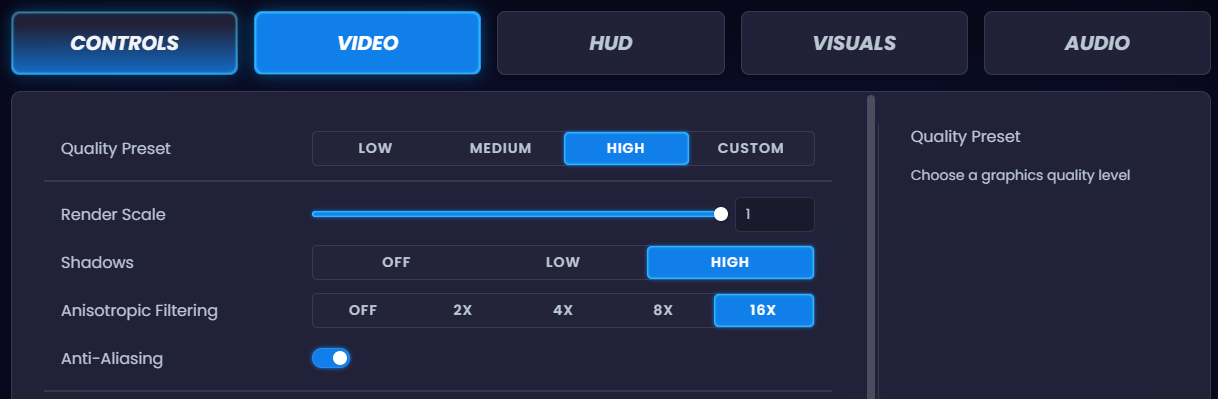
Graphics Settings: Why High Frame Rates Matter
You cannot hit what you cannot see smoothly. Projectile aiming relies heavily on your ability to visually track an enemy’s trajectory. If your game is stuttering, your brain struggles to predict where the projectile needs to land.
- Prioritize Frame Rate: Lower your graphical settings (shadows, textures, and post-processing) to maximize your FPS (Frames Per Second). A stable 144Hz or 240Hz monitor is a massive advantage in 2026.
- Input Lag Reduction: Enable features like NVIDIA Reflex or AMD Anti-Lag+. These technologies significantly reduce the delay between your mouse click and the projectile spawning on screen.
- Field of View (FOV): A wider FOV helps with situational awareness, but an extremely high FOV can make distant targets look smaller and harder to track. Try sticking between 95 and 105 for the best balance.

Mastering the “Lead”: Understanding Projectile Mechanics
Projectile aiming isn’t just about settings; it’s about understanding the game engine. Every game has a different “bullet velocity.” You must learn how far in front of a target to aim based on their movement speed and distance.
Practical Tips for Better Tracking:
- Mirroring vs. Anti-Mirroring: When tracking, try to match your movement speed with your target’s movement. This makes the target appear stationary on your screen, making it easier to land projectiles.
- Crosshair Placement: Don’t aim at where the enemy is; aim at where they are going to be. Keep your crosshair at head height near corners to reduce the distance you have to flick when an enemy appears.
- Use Dedicated Aim Trainers: Platforms like Aiming.Pro or Kovaak’s have specific scenarios designed for “tracking” and “projectile lead.” Spend 15 minutes a day on these to see rapid improvement.
The Role of Hardware: Mousepad and Sensor
In 2026, the market is flooded with lightweight mice and low-friction pads. For projectile aiming, a large mousepad is non-negotiable. You need the space to perform long, smooth tracking swipes without running off the edge of your pad.
- Mouse Weight: Aim for a mouse under 60 grams. Reduced weight helps reduce fatigue during long sessions and allows for faster, more reactive tracking adjustments.
- Sensor Quality: Ensure your mouse uses a modern sensor (like the PixArt 3395 or equivalent). These sensors offer flawless tracking with zero jitter, which is critical when you are trying to lead a shot on a fast-moving target.
Developing a Training Routine
Improvement doesn’t happen overnight. To master projectile aiming, you need a structured plan. Start your gaming session with a 10-minute warm-up focusing on tracking drills.
- Monday-Friday: 15 minutes of tracking exercises in an aim trainer.
- Weekend: Focus on game-specific drills, such as practicing “leading” shots on moving bots in the game’s firing range.
- Review Your VODs: Record your gameplay and watch your misses. Did you aim behind the target? Did you overcompensate? Identifying your pattern is the fastest way to fix it.
Conclusion
Mastering projectile aiming is a journey that combines the right hardware settings, optimized software, and consistent deliberate practice. By lowering your DPI, maximizing your FPS, and focusing on smooth tracking movements, you will find yourself hitting those difficult shots with ease. Remember, every pro player started as a beginner—the difference is that they focused on the fundamentals. Keep your settings consistent, stay patient with your progress, and you will dominate the leaderboard in 2026.