
If you have spent any time in the competitive arenas of 2026, you know that hitscan weapons—where your crosshair placement equals an instant hit—are only half the battle. To truly dominate, you must master the art of the projectile weapon. Unlike instant-hit guns, projectile-based weaponry requires you to account for travel time, gravity, and target anticipation.
Whether you are a newcomer to the genre or a veteran looking to refine your aim, this guide will demystify the mechanics behind rockets, grenades, and bolts. By understanding how these physics-based systems function, you can turn a difficult learning curve into a distinct competitive advantage.
Hitscan vs. Projectiles: Why the Difference Matters
In the landscape of modern gaming, distinguishing between hitscan and projectile systems is the first step toward better aim. Hitscan weapons rely on a mathematical raycast that registers a hit the moment you pull the trigger. Projectiles, however, exist as independent objects within the game world.

When you fire a rocket or a grenade launcher, the game engine—whether it is Unreal Engine 5.5 or a custom Unity build—spawns an entity that travels through space. This means you aren’t aiming at where the enemy is; you are aiming at where they will be. Mastering this “leading” technique is the hallmark of a skilled FPS player.
Understanding Projectile Physics: The Basics
To excel with projectile weapons, you must internalize three core variables: Velocity, Gravity, and Arc.
- Travel Time: Every projectile has a set speed. Fast-moving projectiles, like sniper bolts, require minimal leading, while slow-moving rockets require significant anticipation.
- Gravity and Drop: In many 2026 titles, projectiles are subject to gravity. You will often need to aim slightly above your target to compensate for the “bullet drop” that occurs over distance.
- Splash Damage: Unlike hitscan, many projectile weapons offer area-of-effect (AoE) damage. Even if you miss a direct hit, landing a shot near an enemy’s feet can still secure a kill or suppress their movement.

Why Beginners Should Start with Projectile Weapons
Many players avoid projectile weapons because they feel “inconsistent,” but they are actually the best way to learn predictive aiming. Developing the ability to read enemy movement patterns is a transferable skill that will improve your performance across every FPS game you play.
If you are currently learning game development through C# in Unity or Blueprints in Unreal Engine, you will notice that creating these weapons teaches you how the game engine calculates collision. This behind-the-scenes knowledge provides a massive psychological edge in competitive play. You start to “see” the hitboxes, making it easier to time your shots.
Top Tips for Improving Your Aim in 2026
Improving your performance with projectile weapons isn’t just about raw talent; it’s about consistent practice routines. Here is how to sharpen your skills:
- Practice Tracking: Use aim trainers to focus on tracking moving targets. Projectile weapons punish “flick” aimers; you need to keep your crosshair moving with the target throughout the shot’s travel time.
- Study the Maps: Learn the common “lanes” and choke points. Projectiles are at their strongest when you can fire them into high-traffic areas where enemies have nowhere to dodge.
- Manage Your Reloads: Projectile weapons often have slower fire rates. Don’t waste your shots; use them to zone out enemies rather than “spamming” in hope of a lucky hit.
Advanced Strategy: The Art of Anticipation
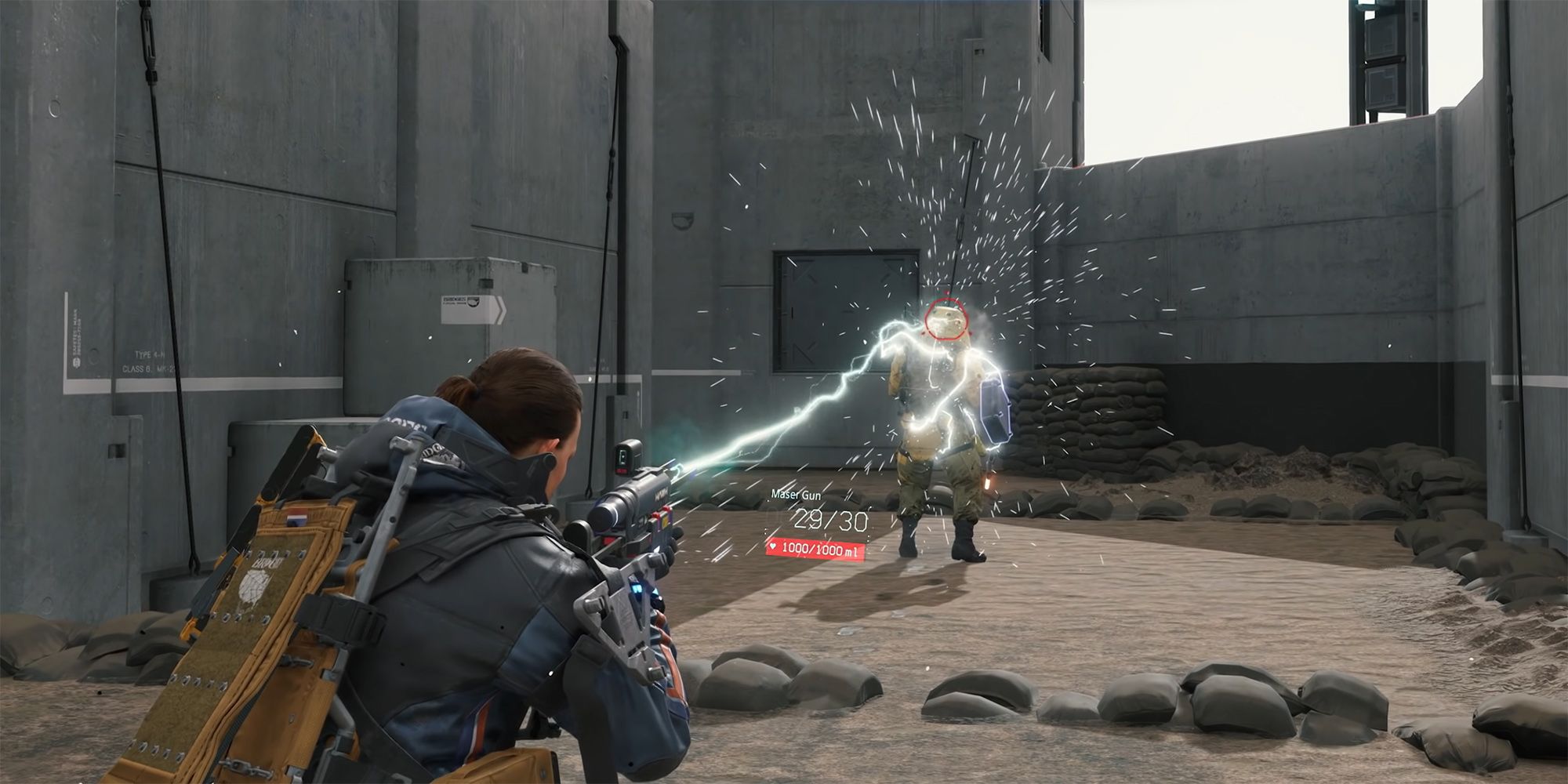
The most dangerous projectile players are those who play mind games. Instead of aiming directly at the enemy, fire at the space they are likely to retreat into. If an enemy is running to cover, fire your rocket at the wall or floor near that cover.
This forces your opponent into a “lose-lose” scenario: they either take the hit or stay in the open to be finished off by your primary weapon. By treating your projectile weapon as a utility tool rather than just a primary damage source, you increase your impact on the match significantly.
Conclusion: The Path to Mastery
Mastering projectile weapons is a journey that requires patience and a deep understanding of game physics. By moving away from the “point and click” mentality of hitscan and embracing the tactical depth of arcs, gravity, and travel time, you elevate your status from a casual player to a tactical threat.
As we move further into 2026, games continue to push the boundaries of realistic ballistics. Use this guide as your foundation, practice your leading, and never stop analyzing the movement of your opponents. The next time you step into the arena, don’t just shoot—calculate, lead, and conquer.