
In the hyper-competitive landscape of 2026 gaming, raw skill isn’t the only factor determining your success. Whether you are grinding in a tactical shooter, optimizing a build in an MMORPG, or tuning your gear in airsoft, understanding the math behind your weapon is crucial. If you want to dominate the leaderboard, you need to move beyond “feel” and start relying on precise data.
An FPS damage per shot calculator is the secret weapon of top-tier players. By breaking down how much impact your weapon has per trigger pull and how that scales over time, you can identify which gear is truly “meta” and which is just taking up inventory space.
Why You Need a Damage Per Shot Calculator in 2026
Modern games are more complex than ever. With intricate armor penetration, critical hit multipliers, and reload animation frames, guessing your effectiveness is a recipe for failure. A reliable damage per shot calculator removes the guesswork by providing a mathematical foundation for your loadout choices.

When you use a calculator, you aren’t just looking at a single number. You are analyzing the efficiency of your playstyle. For instance, a weapon with high raw damage per shot might seem superior, but if its fire rate is sluggish or its reload time is punishing, its sustained DPS will plummet in a 30-second engagement.
Understanding the Difference: Burst vs. Sustained DPS
To truly master your weapon, you must distinguish between Burst DPS and Sustained DPS. Most amateur players look only at the damage per bullet, but the pros look at the full cycle of combat.
What is Burst DPS?
Burst DPS measures the damage output during the initial moments of an engagement—essentially, how fast you can empty your magazine. This is vital for “peek-and-shoot” tactical games where milliseconds determine the winner of a duel.
The Power of Sustained DPS
Sustained DPS is the gold standard for 2026 gaming optimization. It accounts for:
- Magazine size: How many rounds you can fire before needing a tactical pause.
- Reload time: The “dead zone” where you are most vulnerable.
- Fire rate: The number of hits per second.

By calculating your output over a 30-second window, you get a much clearer picture of your performance. A weapon that reloads quickly will often outperform a “heavy hitter” that forces you to sit through a lengthy reload animation in the heat of battle.
How to Optimize Your Build Using Data
If you are using tools like Calcshark or other dedicated DPS calculators, you have access to advanced variables. In 2026, the best calculators allow you to input armor penetration effects and critical hit chance.
- Input Base Stats: Start with your weapon’s damage-per-hit and fire rate.
- Account for Modifiers: Factor in any active buffs, skill tree bonuses, or armor-piercing attachments.
- Simulate Combat: Use the calculator to compare two different weapons against a target with high armor values.
- Analyze the Results: Look for the “Break-even point” where your chosen weapon becomes more effective than its alternatives.
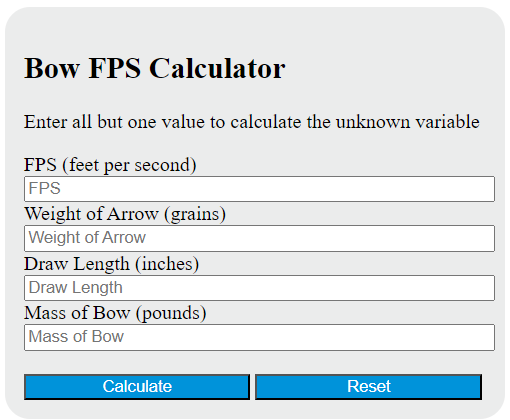
Beyond the Numbers: Practical Application
While the FPS damage per shot calculator provides the math, you must apply it to your specific game environment. In some titles, movement speed is penalized by weapon weight. In others, recoil patterns make hitting every shot impossible, effectively lowering your real-world DPS compared to the theoretical maximum.
Always remember that theoretical DPS is a ceiling, not a guarantee. If your calculator shows that Weapon A is 5% better than Weapon B, but Weapon A has an erratic, uncontrollable recoil pattern, the “worse” weapon might actually be the better choice for your accuracy.
Conclusion: Take Control of Your Performance
In 2026, information is the most valuable resource on the battlefield. By utilizing a damage per shot calculator, you stop playing by intuition and start playing by the numbers. Whether you are optimizing a character build in a complex RPG or perfecting your airsoft loadout, these tools provide the clarity needed to make informed decisions.
Don’t settle for “good enough.” Use the math to find your edge, refine your strategy, and ensure that every shot you fire counts toward your path to victory.