
In the landscape of 2026 gaming, the line between simulation and arcade-style entertainment has blurred significantly. As developers leverage the full potential of Unreal Engine 5.4, Chaos Physics, and advanced global illumination, the way we perceive ballistics has fundamentally shifted. Whether you are a competitive player striving for top-tier rank or an aspiring developer building your first tactical shooter, understanding the mechanics behind the bullet is no longer just a technical detail—it is the foundation of the player experience.
When you pull the trigger in a modern First-Person Shooter, a complex series of calculations occurs in a fraction of a millisecond. The sensation of weight, the necessity of leading a target, and the satisfaction of a long-distance hit are all governed by the engine’s choice between hitscan and projectile physics. In this guide, we explore the architecture of these systems, how modern physics simulations are redefining engagement, and why projectile mechanics are now the gold standard for high-fidelity shooters.
The Evolution of Hitscan: The Instantaneous Standard
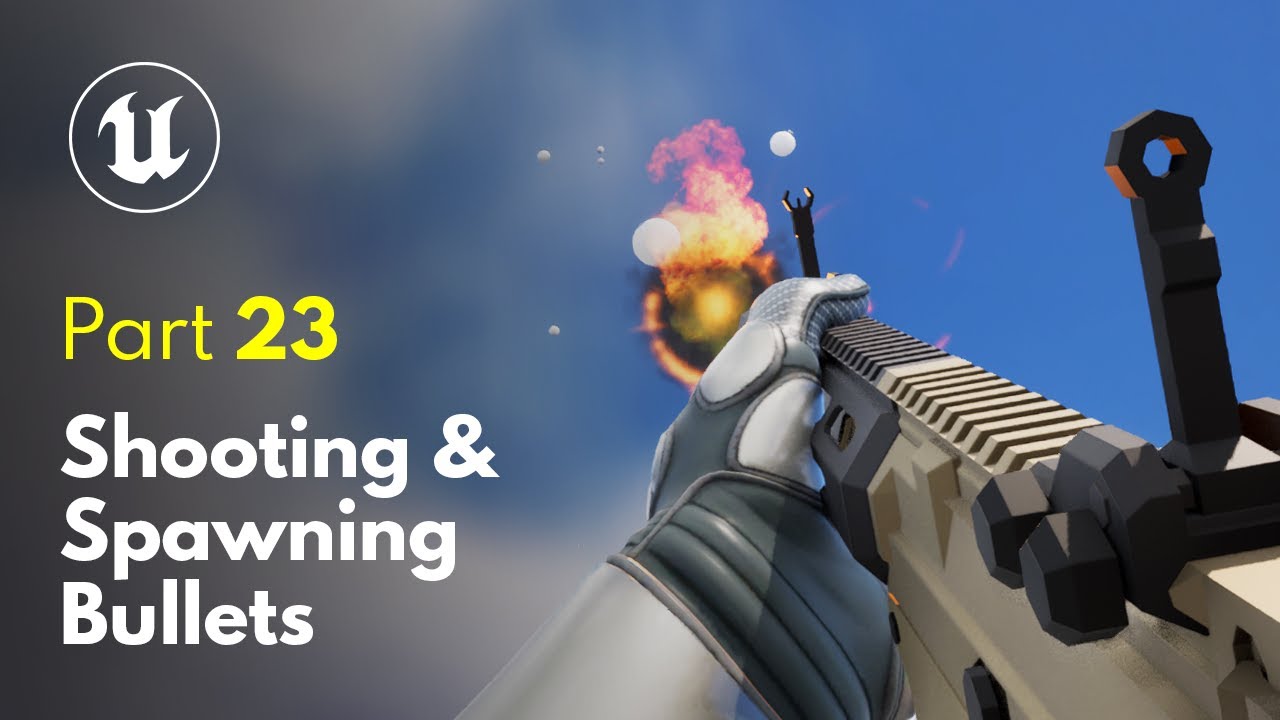
For decades, hitscan has been the backbone of the FPS genre. The logic is computationally elegant: when the player clicks the mouse, the engine fires a raycast—a straight, infinite line originating from the camera or the weapon muzzle. If that line intersects with a hitbox or collider within the same frame, the game registers a hit immediately. Because there is no travel time, the system is perfectly synchronized with the player’s input, making it the preferred choice for fast-paced arena shooters where reaction time is measured in milliseconds.
However, by 2026, pure hitscan is increasingly viewed as a limitation for titles aiming for deep immersion. While it minimizes the impact of latency and jitter, it lacks the tactical nuance required for modern “mil-sim” experiences. Developers are now utilizing hybrid hitscan systems, where close-quarters combat remains instantaneous to ensure fluid movement, while medium-to-long-range engagements transition to projectile physics to force players to respect distance and positioning.
The Architecture of Projectile Physics
Unlike hitscan, projectile ballistics treat every bullet as an independent Actor or Entity within the game world. When a player fires, the engine spawns a physical object that possesses velocity, mass, and drag coefficients. This object exists in space and time, meaning it must travel from point A to point B before it can interact with a target. This creates the “bullet travel time” that defines tactical shooters.
In modern engines, this process is handled by a physics sub-stepping system. Instead of calculating the bullet’s position once per frame—which could lead to “tunneling,” where a fast-moving object passes through a thin wall without colliding—the engine calculates the bullet’s path multiple times per frame. This ensures that even at extreme velocities, the collision detection remains precise. For developers, managing these physics ticks is a balancing act between server performance and gameplay integrity.
Environmental Factors and Modern Ballistics Simulation
The most significant leap in 2026 is the integration of dynamic environmental variables into projectile calculations. Modern engines no longer treat the air as a vacuum. Instead, they apply a force vector to every projectile based on the current world state. This forces players to engage with the environment as a tactical obstacle.
Gravity is the most common variable, requiring players to perform bullet drop compensation. However, contemporary titles have moved beyond simple vertical adjustment. Air friction or drag is now calculated based on the bullet’s ballistic coefficient, meaning different ammunition types lose velocity at different rates. Furthermore, dynamic wind systems now influence the trajectory, requiring players to utilize on-screen scope readouts to calculate windage. When a gust of wind is procedurally generated by the game’s weather system, the projectile’s path is adjusted in real-time, making every long-range shot a unique mathematical challenge.
The Impact of Server-Side Reconciliation and Netcode
Implementing complex projectile mechanics introduces a significant challenge: latency. If a bullet takes 100 milliseconds to travel to a target, and the player has 50 milliseconds of ping, the server must decide when the shot was actually fired and where the target was at that exact moment. This is where server-side lag compensation becomes critical.
In 2026, top-tier shooters utilize backtracking algorithms. The server maintains a history of object positions for the last 500 milliseconds. When a player fires a projectile, the server looks back in time to see exactly where the target was positioned at the moment the player clicked. This ensures that even with the added complexity of travel time, the game feels fair. Without these robust netcode solutions, projectile-based games would feel “floaty” or unresponsive, alienating the competitive player base.
Weapon Customization and Ballistic Modifiers
Modern gameplay depth often relies on how weapon attachments influence physics. In titles released in 2026, the choice of a muzzle brake, barrel length, or ammunition type is not just cosmetic; it directly alters the underlying physics values of the projectile.
- Barrel Length: Longer barrels increase muzzle velocity, which decreases travel time and reduces the amount of vertical bullet drop.
- Ammunition Type: Subsonic rounds may be quieter but suffer from increased gravity drop and slower travel speeds, forcing a trade-off between stealth and lethality.
- Muzzle Attachments: Specialized suppressors might introduce heat haze or thermal distortion, adding a visual layer to the ballistic experience that affects aiming precision.
This level of simulation allows for a “meta” where players must choose their loadout based on the map’s engagement distances. A sniper optimized for a dense urban environment will feel vastly different from one built for long-range desert scouting, providing a layer of strategic depth that hitscan systems simply cannot replicate.
The Future: Machine Learning and Predictive Physics
Looking toward the end of 2026 and beyond, we are seeing the integration of Machine Learning (ML) in ballistic prediction. Some developers are experimenting with Neural Physics Engines that can predict the optimal path of a projectile more efficiently than traditional iterative calculations. By training a model on millions of simulated shots, the engine can approximate the trajectory of a projectile with extreme accuracy, while reducing the CPU load on the server.
This allows for more projectiles to be active in the world simultaneously—essential for massive-scale shooters featuring hundreds of players. As hardware continues to evolve, we expect to see more destructible environments interacting with projectiles. If a bullet grazes a surface, the engine might calculate a ricochet vector based on the material’s density and angle of impact, turning a missed shot into a tactical opportunity.
Frequently Asked Questions
What is the main difference between hitscan and projectile systems?
The primary difference is travel time. Hitscan is instantaneous, using a raycast to check for hits the moment the trigger is pulled. Projectile systems treat bullets as physical objects that must travel through the game world, requiring players to lead their targets and account for physics like gravity and drag.
Do projectile mechanics make the game harder to play?
Yes, projectile mechanics generally increase the skill ceiling. Because players must account for bullet travel time, drop, and environmental factors, it requires more practice and situational awareness compared to hitscan, where players only need to track the target with their crosshair.
Why do some games use both systems?
Many modern shooters use a hybrid approach to balance performance and immersion. Hitscan is often used for short-range combat to ensure the game feels responsive, while projectile physics are reserved for long-range weapons like sniper rifles to provide a more realistic and rewarding experience for skillful players.
Conclusion
Projectile mechanics are the pulse of the modern FPS. As we navigate the gaming landscape of 2026, the shift toward deep, physics-based simulations has transformed how we engage with our targets. By understanding the interplay between muzzle velocity, environmental variables, and netcode reconciliation, players can gain a significant edge in their favorite titles. Whether you are adjusting for windage on a distant ridge or optimizing your weapon loadout for maximum velocity, the mechanics of the bullet are the ultimate test of a player’s skill and a developer’s commitment to quality. As technology continues to push the boundaries of realism, we can only expect these systems to become more intricate, rewarding, and immersive.