
When it comes to ballistics, the debate often centers on caliber size or bullet weight. However, as we move through 2026, the data remains crystal clear: muzzle velocity is the single most influential variable in external and terminal ballistics. Understanding how projectile speed affects the “time to kill” (TTK) is essential for anyone interested in physics, engineering, or professional marksmanship.
The Physics of Velocity: Why Speed is King
At its core, a projectile’s lethality is governed by the laws of motion. According to the standard formula for kinetic energy (KE = ½mv²), energy scales with the square of the velocity. This means that even a minor increase in speed results in an exponential rise in the energy delivered upon impact.
When a projectile leaves the barrel, it is at its absolute peak velocity. From that moment, air resistance begins to strip away that energy. A high-speed projectile minimizes the time spent in flight, which is critical for reducing the “reaction window” and ensuring the round strikes with enough force to incapacitate the target instantly.
Terminal Ballistics: The Mechanism of Incapacitation
“Time to kill” is not just about the moment of impact; it is about how quickly the projectile can compromise vital systems. Terminal ballistics dictates that lethality is entirely dependent on the tissue crushed or cut in the direct path of the projectile.
- Permanent Cavity: This is the physical hole created by the projectile as it cuts through tissue.
- Temporary Stretch Cavity: High-velocity rounds create a pressure wave that pushes tissue outward, potentially damaging organs that were not even in the direct path of the bullet.
- Penetration Depth: If a bullet travels too fast but lacks structural integrity, it may fragment too early. Conversely, if it is too slow, it may fail to reach vital organs.
Velocity Decay and Effective Range
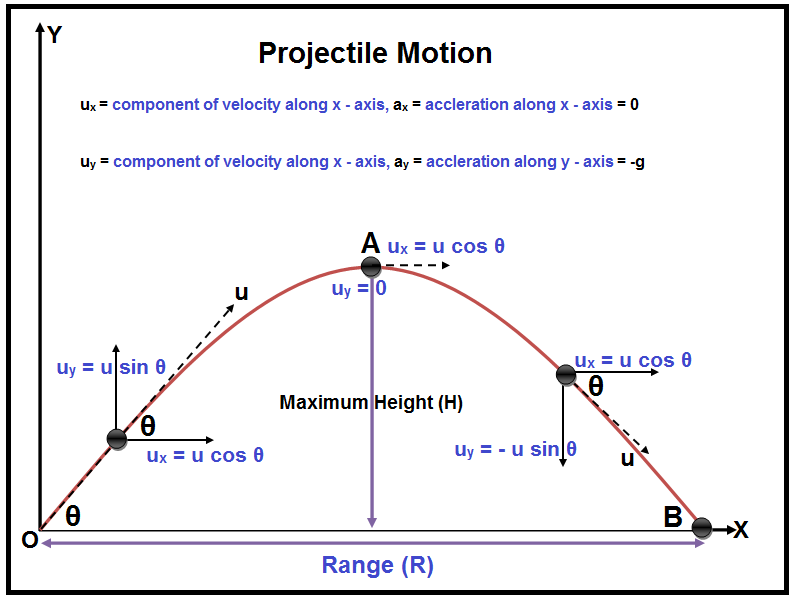
It is a common misconception that a projectile maintains its lethal velocity throughout its entire flight. In reality, muzzle velocity drops off steadily due to atmospheric drag. By 2026, advanced ballistic modeling software has become the standard for calculating exactly when a bullet drops below the “velocity threshold” required for effective expansion or fragmentation.
For a projectile to be effective, it must maintain a specific velocity window upon impact. If the impact velocity is too low, the bullet behaves like a simple metal rod, causing minimal trauma. If it is high enough, the bullet induces hydrostatic shock, significantly accelerating the time to kill.
The Relationship Between Speed and Accuracy
While speed is vital for terminal performance, it is equally important for external ballistics. A faster projectile experiences less drop over distance and is less affected by wind drift.
By reducing the time of flight, high-velocity projectiles allow the shooter to engage targets with greater precision. In 2026, the integration of smart-optics and laser rangefinders has further emphasized the importance of high-velocity ammunition, as these systems rely on predictable, flat-trajectory data to calculate the point of impact.
Key Factors Influencing TTK:
- Velocity Retention: How well the bullet maintains speed over distance (Ballistic Coefficient).
- Expansion Threshold: The minimum speed required for the projectile to deform and create a larger wound channel.
- Target Density: How the projectile interacts with different types of medium (e.g., ballistics gel vs. bone).
Balancing Speed and Stability
Increasing velocity is not always a linear path to better performance. As we push projectiles to extreme speeds, we encounter the limitations of bullet metallurgy. A bullet that is “pushed” too fast may disintegrate upon leaving the muzzle or fail to hold together when striking a target.
Modern engineering in 2026 focuses on “bonded” projectiles that can withstand high muzzle velocities without losing mass. This ensures that the energy is not just present at the muzzle, but is actually delivered into the target, maximizing the biological disruption required to stop a threat as quickly as possible.
Conclusion: The Holistic View of Lethality
The relationship between projectile speed and time to kill is a complex interplay of physics and biology. While velocity is the most significant factor in generating the kinetic energy necessary for incapacitation, it must be balanced with penetration and bullet construction.
As technology evolves in 2026, our ability to measure and manipulate these variables continues to improve. Whether you are looking at long-range precision or close-quarters efficiency, remember that speed is the engine of lethality, but terminal performance is the destination.