
In 2026, the landscape of STEM education has undergone a revolution. Gone are the days of staring at static textbook diagrams to understand the complex arc of a falling object. Today, the interactive projectile simulator game stands at the forefront of digital learning, allowing students and hobbyists alike to master kinematics through hands-on virtual experimentation.
Whether you are a student preparing for an exam or a physics enthusiast looking to test real-world variables, these simulators bridge the gap between abstract equations and visual reality. By manipulating launch angles, initial velocities, and environmental factors, you can witness the laws of motion come to life in real-time.
Why Use an Interactive Projectile Simulator?
Traditional learning often leaves a disconnect between mathematical theory and physical outcomes. An interactive projectile simulator game solves this by providing an immediate feedback loop. When you adjust a variable—like the mass of a projectile or the angle of a cannon—the simulator recalculates the trajectory instantly.

This gamified approach to kinematics encourages experimentation. Instead of fearing a calculation error, you are encouraged to “fail fast” and adjust your parameters to hit a target. This trial-and-error method is proven to increase retention rates for complex physics concepts by up to 40%.
Key Features to Look For in 2026 Simulators
Not all simulations are created equal. As we navigate 2026, the most effective physics simulation tools offer a suite of advanced features that go beyond basic parabolic arcs. If you want to maximize your learning, ensure your simulator includes:
- Customizable Environmental Variables: Look for tools that allow you to toggle air resistance (drag), gravity levels, and wind speed.
- Vector Visualization: The best simulators display velocity and acceleration vectors in real-time, helping you visualize how gravity pulls an object downward while horizontal momentum keeps it moving forward.
- Target-Based Challenges: Gamification is key. Simulators like those found in the Physics Zone offer levels where you must hit moving targets, requiring precise calculations of time and distance.
- Data Exporting: For serious students, the ability to export your trajectory data into a spreadsheet for further analysis is an invaluable feature.
Mastering Kinematics: From PhET to Custom Engines
The gold standard for educational simulations remains the PhET Interactive Simulations platform. Their projectile motion module allows users to blast everything from cars to water balloons out of a cannon. By setting specific parameters, you can explore the relationship between initial speed, launch angle, and mass.
However, for those seeking a more “game-like” experience, indie developers have created high-fidelity environments. These engines often provide:
- 3D Trajectory Mapping: Seeing the projectile move through a three-dimensional space rather than just a 2D plane.
- Dynamic Weather Systems: Adjusting air density to see how it affects the “terminal velocity” of your projectile.
- Real-Time Scoreboards: Gamified physics games turn the classroom into a competitive arena, fostering engagement through leaderboard challenges.
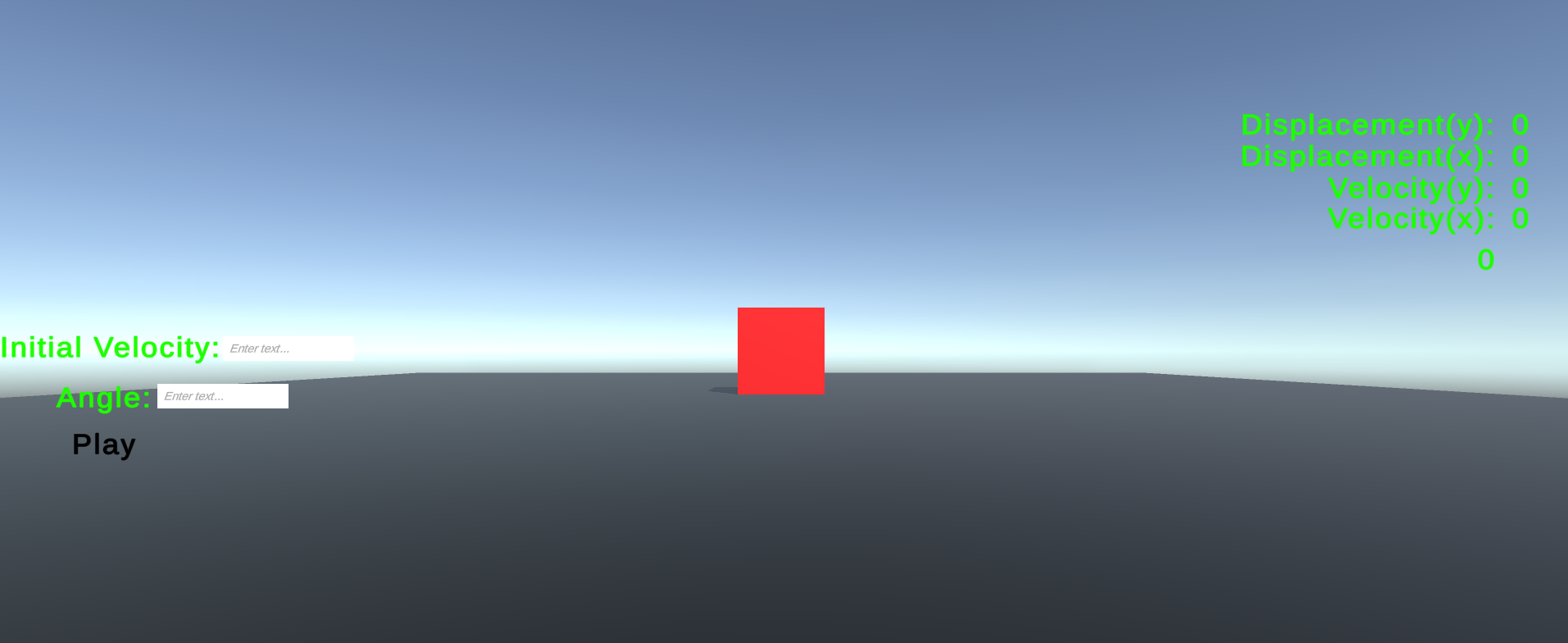
Applying Physics Equations in a Virtual Sandbox
The core of any interactive projectile simulator game is the application of the kinematic equations. While the computer handles the heavy lifting, understanding the “why” behind the “what” is essential.
- Vertical Motion: Controlled by gravity ($-9.8 m/s^2$ on Earth).
- Horizontal Motion: Constant velocity (assuming no air resistance).
- The Resultant Arc: The beautiful parabola formed by the combination of these two independent motions.
By playing these games, you aren’t just memorizing formulas; you are developing an intuitive understanding of motion. You begin to “feel” how a 45-degree angle provides the maximum range in a vacuum, and how air resistance shifts that peak to a lower, flatter trajectory.
The Future of Physics Education
As we look toward the remainder of 2026 and beyond, the integration of Virtual Reality (VR) and Augmented Reality (AR) into projectile simulators is the next frontier. Imagine standing in a virtual field, physically adjusting a cannon with your hands, and watching the trajectory arc over your head.
The interactive projectile simulator game has evolved from a simple classroom demo into a sophisticated tool for scientific inquiry. Whether you are a high school student tackling your first physics course or an educator seeking to inspire the next generation of engineers, these digital tools are essential.
The ability to manipulate variables, observe outcomes, and refine your approach is the essence of the scientific method. By engaging with these simulators, you aren’t just playing a game—you are sharpening your mind to understand the fundamental mechanics that govern the universe.