
The study of projectile motion—the path followed by an object subjected only to the force of gravity—remains a cornerstone of classical mechanics. As we navigate through 2026, the debate between online vs. offline projectile mechanics learning has evolved into a complementary relationship. Whether you are a student, an engineer, or a hobbyist, understanding how these two modes of study interact is critical for mastering complex kinematic equations.
The Evolution of Projectile Physics in the Digital Age
Traditionally, learning projectile motion involved pen, paper, and physical lab equipment like spring-loaded launchers. While offline experimentation provides a vital tactile connection to gravity and air resistance, it is often limited by equipment availability and measurement errors.
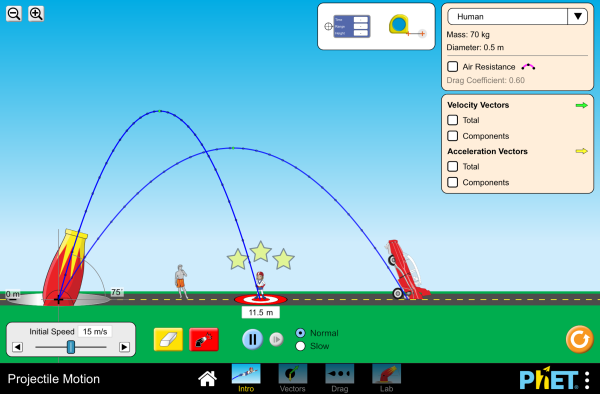
In 2026, online projectile simulators have bridged this gap. These platforms allow users to manipulate variables like initial velocity, launch angle, and mass with surgical precision. By leveraging HTML5 applets and JavaScript-based simulations, learners can visualize vector components and parabolic trajectories that were once difficult to graph manually.
Why Online Simulation is Transforming Kinematics
The primary advantage of online mechanics is the ability to iterate rapidly. Unlike a physical lab where resetting a launcher takes time, online projectile motion tools allow for near-instantaneous changes to parameters.
- Variable Control: Instantly toggle air resistance, wind speed, and atmospheric density.
- Data Visualization: Real-time generation of parabolic curves and vector representations.
- Accessibility: Nearly 100 interactive simulations are now available, catering to varying levels of physics proficiency.

By analyzing these simulations, students can observe how acceleration effects impact the range and peak height of a projectile. This digital feedback loop accelerates the learning process, making complex concepts like drag coefficients more intuitive.
The Enduring Value of Offline Mechanics
Despite the technological leaps in 2026, offline projectile mechanics remain irreplaceable. There is a distinct “physics intuition” gained when you physically measure the distance a ball travels across a floor versus clicking a button on a screen.
Physical labs teach students to account for experimental uncertainty and human error, which are absent in “perfect” digital environments. When you engage in hands-on physics, you are forced to deal with real-world variables like surface friction and mechanical inconsistencies. This physical grounding is what separates a theoretical physicist from a practical engineer.

Comparing the Two: A Synergistic Approach
To truly excel in projectile mechanics in 2026, you should not choose one over the other. Instead, adopt a hybrid learning strategy. Use online simulators to verify your mathematical predictions and explore extreme scenarios, then use offline experiments to test the validity of those digital models in the real world.
Key Differences at a Glance:
| Feature | Online Mechanics | Offline Mechanics |
| :— | :— | :— |
| Precision | Extremely high (ideal) | Variable (subject to error) |
| Setup Time | Instant | Requires calibration |
| Conceptual Depth | Excellent for visualization | Excellent for tactile understanding |
| Complexity | Easy to add air resistance/drag | Difficult to isolate variables |
Leveraging Digital Tools for 2026 Success
As we move deeper into the decade, the integration of AI-driven physics tutors and advanced JavaScript applets will continue to refine how we study motion. Modern simulations now feature dynamic graphing, allowing you to see how the velocity vector changes at every point along the trajectory.
If you are struggling with kinematic equations, start by inputting your variables into an online projectile simulator. Once you grasp the relationship between the angle and the range, move to a physical experiment to see if your calculated results match the reality of a physical launch. This cross-verification method is the gold standard for modern engineering students.
Conclusion: The Future of Physics Education
The choice between online vs. offline projectile mechanics is no longer binary. In 2026, the best approach is to leverage the speed and visual clarity of online simulations while maintaining the rigorous experimental discipline of offline labs. By combining these two worlds, you develop a robust understanding of kinematics that is both theoretically sound and practically applicable.
Whether you are perfecting your understanding of parabolic curves or investigating the nuances of air resistance, remember that the goal is to bridge the gap between abstract equations and the physical world. Embrace the tools available today to become a more proficient and insightful physicist.