
In the ever-evolving landscape of MegaBonk, understanding the granular math behind your damage output is the difference between a mid-tier build and a screen-clearing powerhouse. As we move through 2026, the meta has shifted toward highly specific stat optimization and precise damage calculation. This guide provides a comprehensive projectile count vs attack instances explained, focusing on two of the most misunderstood mechanics: Projectile Count and Attack Instances.
While they might seem interchangeable at a surface level, they function under entirely different mathematical frameworks. If you are struggling to push into the higher tiers of MegaBonk, this guide will break down exactly how these stats interact, how they contribute to overall damage scaling, and why choosing the wrong one can flatline your DPS.
The Core Difference: Defining the Mechanics
Before diving into the complex interactions, we must establish a clear baseline. In MegaBonk, Projectile Count refers to the additive number of individual objects spawned per trigger event. If your weapon fires one bolt and you have +3 Projectile Count, you are now launching four projectiles simultaneously.
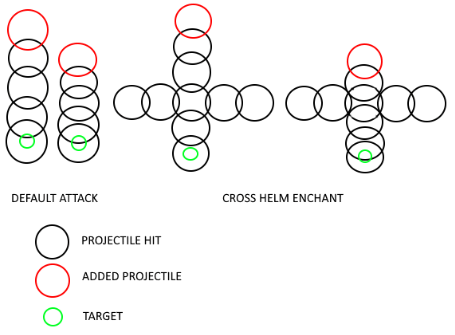
Conversely, Attack Instances—often influenced by Attack Speed—refer to the frequency at which your character triggers the “fire” command. If your Attack Speed is high, you aren’t necessarily firing more projectiles at once; you are firing your weapon more often per second. Understanding this distinction is vital because these two stats serve different roles in your overall stat priority and scaling strategy.
How Projectile Count Scales Your Build
Projectile Count is an additive stat that acts as a multiplier for your total potential coverage and Area of Effect (AoE) damage. As highlighted in recent MegaBonk theory-crafting, character-wide projectile bonuses are applied globally. If you pick up a passive node or gear piece that grants +3 Projectile Count, every weapon in your arsenal benefits.
This is exceptionally powerful for “shotgunning” mechanics. When a single enemy can be hit by multiple projectiles from the same attack, your Total Damage Per Instance skyrockets. However, there is a diminishing returns factor to consider. Adding a 10th projectile to a weapon that already fires nine is less impactful than adding a 2nd projectile to a weapon that fires one.
The Math Behind Additive Scaling
In 2026, the community consensus is clear: Additive stats are best when your base count is low.
Base (1) + Bonus (1) = 100% Damage Increase.
Base (1) + Bonus (5) = 500% Damage Increase.
Base (10) + Bonus (5) = 50% Damage Increase.
Always prioritize Projectile Count on weapons with low base counts to maximize your scaling efficiency and optimize your stat priority for early gains.
Attack Instances: The Frequency of Destruction
Attack Instances are governed primarily by Attack Speed. While Projectile Count increases the width of your damage, Attack Speed increases the cadence. If you are playing a build that relies on “On-Hit” effects, Attack Instances are significantly more valuable than Projectile Count.
Think of it this way: if your weapon deals 100 damage and you have a 10% proc chance to trigger an explosion, you want as many Attack Instances as possible to roll that dice. Increasing your Projectile Count will fire more bullets, but if those bullets don’t trigger individual “On-Hit” checks, you are wasting your potential.
Attack Speed vs. Cooldown
A common point of confusion in 2026 is the relationship between Attack Speed and Cooldown Reduction.
Attack Speed dictates how many times you swing or fire per second.
Cooldown dictates the downtime between specific ability triggers.
If you have a high-cooldown skill, stacking Attack Speed will do nothing for your burst damage. You must identify whether your primary damage source is a “Basic Attack” (which scales with Attack Speed) or a “Special Ability” (which scales with Cooldown).
Synergizing the Two: The “Golden Ratio”
The most successful builds in MegaBonk don’t choose between Projectile Count and Attack Instances; they find the Golden Ratio. If you have massive Projectile Count but low Attack Speed, you are a glass cannon that only fires once every few seconds. If you have massive Attack Speed but low Projectile Count, you lack the Area of Effect (AoE) damage potential to clear mobs.
Steps to Optimize Your Build:
- Identify your Weapon Type: Does your weapon rely on base damage per hit, or total hits per second?
- Calculate the “Hit Window”: If your weapon has a long wind-up animation, prioritize Attack Speed to reduce the time spent in the “stuck” state.
- Check for “Shotgunning” Compatibility: If your weapon projectiles pierce or explode, Projectile Count is your primary scaling priority.
- Balance your Multipliers: Ensure that you are not over-investing in one stat while ignoring the other. Use the 1:2 Rule: For every two points of Attack Speed, aim for one point of Projectile Count.
Common Pitfalls in 2026 Theory-Crafting
One of the biggest mistakes players make this year is assuming that “more is always better.” In MegaBonk, certain weapons have internal caps on how many projectiles they can handle before the game engine begins to stutter or the projectiles begin to overlap in a way that provides no additional damage, potentially leading to significant performance impact.
Furthermore, some players neglect Size Scaling. If you increase your Projectile Count to 20, but your projectiles are so small that they miss the hitbox of the boss, you have effectively wasted your stat investments. Always look for gear that pairs Projectile Count with Projectile Size to ensure your increased volume actually translates into increased damage.
The Role of Critical Hits
It is impossible to discuss Attack Instances without mentioning Critical Strike Chance. Because Crit Chance is calculated per instance, increasing your Attack Instances is the most reliable way to ensure you are proccing your Crits consistently.
If you are running a high-crit build, prioritize Attack Speed above all else. By forcing more hits per second, you flatten the variance of your RNG, ensuring that your damage output remains stable rather than “swingy” and maximizing your critical proc chance.
Conclusion: Mastering the Meta
The debate between Projectile Count and Attack Instances is ultimately a question of your build’s identity. This guide on projectile count vs attack instances explained helps you decide: Do you want to be a sniper, firing singular, devastating projectiles that clear screens with sheer volume? Or do you want to be a machine-gunner, filling the air with rapid-fire instances that trigger secondary effects and explosions?
As we move through 2026, the most effective MegaBonk players are those who read their weapon descriptions carefully. Remember:
Projectile Count = Screen Coverage and Shotgunning.
Attack Instances = Frequency of Hits and “On-Hit” Effect Procs.
By balancing these two, you will maximize your DPS and ensure that your character is ready for whatever endgame challenges the developers throw at us next. Keep experimenting, keep calculating, and most importantly, keep bonking!
While the core concept of Attack Instances driving “on-hit” effects is clear, understanding the nuances is crucial for endgame optimization. Many powerful legendary items and unique skills in MegaBonk feature effects that trigger “on hit.” These can range from applying status effects like “Blinding Flash” or “Corrosive Slime” to triggering secondary explosions, regenerating resources, or even summoning temporary allies. For builds heavily reliant on these procs, maximizing Attack Instances becomes paramount for effective resource management and sustained combat.
Consider the “Vampiric Gauntlets of Sustenance,” which grant a 1% chance to restore 5% of your maximum health on hit. A weapon with a high Projectile Count but low Attack Instances (e.g., a slow-firing “Boulder Lobber” with 5 projectiles) might only trigger this effect once per attack, despite hitting multiple targets. Conversely, a rapid-fire “Shrapnel Scattergun” with a low Projectile Count (e.g., 1-2 projectiles) but very high Attack Instances per second could trigger this effect multiple times in quick succession, providing significantly more consistent healing. This distinction is vital for survivability in high-tier content where sustained resource management often outweighs burst damage. Furthermore, some conditional “on-hit” effects, like “Mark of the Hunter” (which applies a debuff after 5 consecutive hits from the same source), directly reward high Attack Instance generation, often interacting with complex internal cooldowns. Players utilizing such mechanics must prioritize Attack Speed and skills that generate multiple hits per animation, even if individual projectile damage is lower.
The optimal balance between Projectile Count and Attack Instances is rarely static; it shifts dramatically depending on the combat scenario.
Area Clearing (Trash Mobs): For clearing large groups of weaker enemies, Projectile Count often takes precedence. Wide-spreading attacks, even with fewer Attack Instances per target, ensure maximum screen coverage, allowing you to hit more enemies simultaneously and clear packs efficiently. Abilities like the “Arcing Bolt” (high projectile count, medium attack instances) excel here, as they can tag numerous foes, potentially initiating chain reactions or spreading status effects.
Single-Target Bossing: Against powerful single targets, Attack Instances generally become more valuable. Here, maximizing the number of times you hit the boss per second directly translates to more opportunities for critical strikes, “on-hit” effect procs, and consistent Single Target Damage (STD) application. A “Piercing Barrage” (low projectile count, very high attack instances) might seem less flashy but will out-damage a wide-spread attack against a stationary boss due to its sheer frequency of hits, especially when paired with damage-per-hit amplifiers.
Top players often maintain two distinct gear sets or skill tree loadouts: one optimized for rapid area clear and another for focused boss elimination. This adaptive strategy allows them to tackle all challenges MegaBonk throws at them with maximum efficiency, minimizing downtime and maximizing rewards.
The interaction between Projectile Count, Attack Instances, and your character’s gear/skill tree is where true build mastery emerges. Many legendary items offer weapon modifiers and skill modifiers specifically tailored to one of these aspects. For example:
“Quiver of Endless Volleys”: +2 Projectiles for all ranged attacks. (Directly boosts Projectile Count).
“Gloves of the Swift Striker”: +15% Attack Speed, causing skills to hit 1 additional time every 5 attacks. (Directly boosts Attack Instances).
Similarly, skill tree nodes under the “Sharpshooter” path might grant “Forking Shot” (projectiles split into 2 on hit, increasing Projectile Count), while “Berserker” nodes might offer “Flurry of Blows” (each melee attack has a chance to strike twice, increasing Attack Instances). Understanding how these modifiers interact is crucial. A build that stacks “Projectile Count” bonuses without considering the underlying “Attack Instances” might find itself struggling against high-health single targets, while a build focused solely on “Attack Instances” might lack the clear speed for efficient farming. Ultimately, the most successful MegaBonk* players in 2026 are those who meticulously analyze their abilities, gear, and the specific encounters they face. They don’t just “bonk”; they calculate, adapt, and refine their strategies to exploit every mechanic. The journey to true mastery involves constant experimentation and a deep understanding of these fundamental principles.