
In the fast-paced world of 2026 multiplayer gaming, precision is everything. Whether you are building a tactical shooter or a complex fighting game, nothing ruins the player experience faster than projectile desync. When a player fires a weapon but the server disagrees on the trajectory or impact, the game feels “broken” and unresponsive.
Understanding why these discrepancies occur—and how to fix them—is the hallmark of a professional game developer. In this guide, we will break down the mechanics of synchronization, the impact of latency, and the architectural patterns used to keep your projectiles perfectly aligned.
What Exactly Is Projectile Desync?
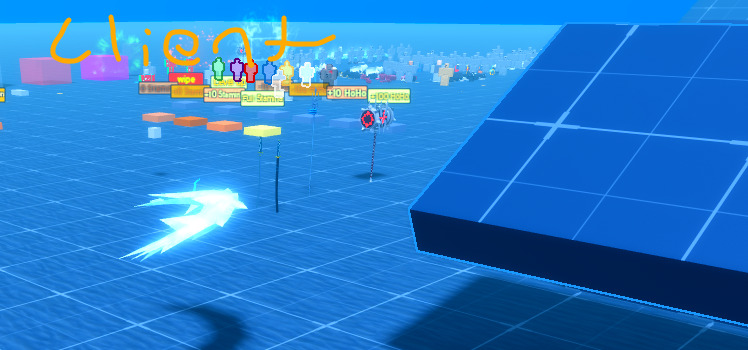
At its core, projectile desync occurs when the state of an object (the projectile) differs between the client (the player’s screen) and the server (the source of truth). Because information takes time to travel across the internet—a phenomenon known as latency or ping—the server is always working with slightly older data than the client.
If a client calculates a projectile’s path locally to ensure smooth visuals, but the server calculates it independently, the two entities will inevitably drift apart. By the time the server processes the “fire” command, the player has already moved, leading to a “ghost hit” or a projectile that seems to pass through an enemy without dealing damage.
The Client vs. Server Dilemma
Developers often face a difficult choice: should the projectile be handled by the client or the server?
The Client-Side Approach
Handling projectiles on the client-side provides the most responsive experience. The moment a player clicks, the projectile appears instantly. However, this is highly susceptible to cheating and extreme desync. If the server does not validate the projectile’s path, malicious players can easily manipulate their shots to hit targets they shouldn’t.
The Server-Side Approach
Running projectiles on the server is the gold standard for security. Every movement is verified, ensuring that only legitimate hits are registered. The downside? Input lag. Because the projectile won’t appear until the server receives the command and sends it back to the client, the player will feel a delay between clicking and seeing the effect.
<img alt="Roblox Desync Explained – Lua – x64" src="https://x64.gg/uploads/default/optimized/1X/6836cbfbb5fa39c91a991f83df4157e7e086e48321024×622.png” style=”max-width:100%; height:auto; border-radius:8px; margin: 1rem 0;” />
Modern Solutions for 2026
To combat these issues, modern game engines utilize Client-Side Prediction and Server Reconciliation. These techniques allow the client to simulate the projectile immediately while the server concurrently calculates the “real” path in the background.
- Client-Side Prediction: The client predicts the outcome of the projectile path before the server confirms it.
- Server Reconciliation: If the server’s calculation differs from the client’s prediction, the client is forced to “snap” to the server’s correct position.
- Lag Compensation: By keeping a history of where players were at specific timestamps, the server can “rewind” time to see if the player’s shot was actually a hit during the moment they fired.
Fighting Games and “Desync” Techniques
In the context of competitive fighting games, such as the Super Smash Bros series, projectile desync refers to something slightly different: manipulating character states to perform unintended actions. As seen in various Ice Climbers tutorials, players can force AI partners or projectiles to behave in frames that don’t align with their primary character.
While this is often used as a high-level competitive technique, it highlights the same fundamental issue: the game engine struggles to keep multiple entities on the exact same frame of logic. Mastering these frames is what separates casual players from esports professionals.
Best Practices for Developers
If you are developing a project in 2026, keep these three pillars of networking in mind to minimize desync:
- Use Interpolation: Smooth out the movement of projectiles on the client so that “snapping” during reconciliation is less jarring for the player.
- Validate on the Server: Never trust the client’s hit detection. The server should always perform the final check to prevent hitbox manipulation.
- Optimize Network Traffic: Don’t replicate every single frame of a projectile’s movement. Send the starting position, velocity, and timestamp, and let the client calculate the rest.
Conclusion
Projectile desync is an unavoidable reality of networked gaming, but it is not an unsolvable problem. By balancing the immediate feedback of client-side visuals with the ironclad security of server-side validation, you can create a seamless experience that feels fair and responsive. As technology advances in 2026, the tools for managing these synchronization issues have become more sophisticated than ever. Stay updated, test your network conditions under high latency, and always prioritize the integrity of your game state.