
Whether you are an engineering student, a game developer, or a sports science enthusiast, calculating the flight path of an object is a fundamental skill. By 2026, the way we approach physics has evolved, moving away from manual, error-prone calculations toward high-precision digital tools. A projectile travel time calculator is the modern solution to understanding the complex variables of parabolic motion.
In this guide, we will break down how these calculators work, why they are essential for your projects, and how you can leverage them to achieve perfect accuracy in your simulations.
Understanding the Science of Projectile Motion
At its core, projectile motion is the study of an object moving through space under the influence of gravity. When you launch an object, it follows a curved path known as a parabola. To determine exactly how long that object stays in the air, you need to account for several critical variables:
- Initial Velocity ($v_0$): The speed at which the object leaves the launch point.
- Launch Angle ($theta$): The angle relative to the horizontal plane.
- Gravity ($g$): The downward acceleration force (standard Earth gravity is $9.81 m/s^2$).
- Initial Height ($h_0$): The vertical offset of the launch point compared to the landing point.

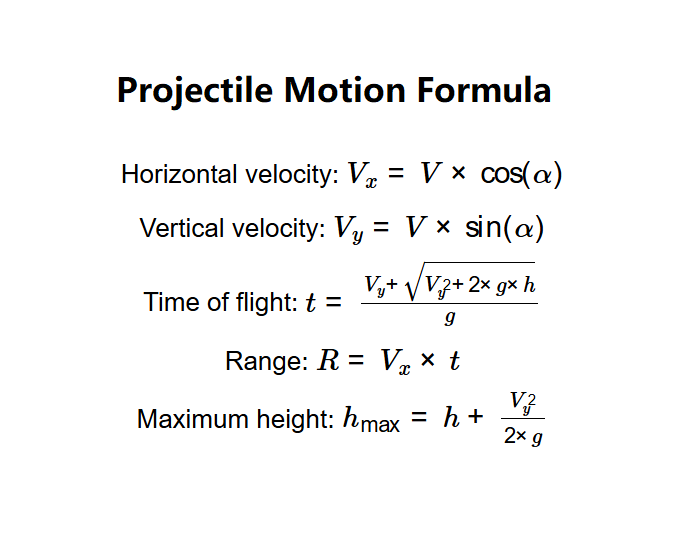
By inputting these values into a professional-grade projectile travel time calculator, you eliminate the need for complex kinematic equations. You get instant results, including time of flight, maximum height, and horizontal range, allowing you to focus on the application rather than the arithmetic.
Why Use a Projectile Travel Time Calculator in 2026?
Manual calculation is prone to human error, especially when dealing with air resistance or varying gravity levels. Modern online calculators provide a streamlined experience for several key sectors:
1. Engineering and Robotics
Engineers use these tools to simulate the trajectory of mechanical components or robotic arms. By using a solve-for-angle or solve-for-speed mode, you can work backward from a required target distance to determine the exact power needed for a mechanism.
2. Game Development and Physics Engines
If you are coding a game in 2026, you know that realistic movement is the key to immersion. Developers use projectile motion data to ensure that arrows, bullets, or basketballs behave according to the laws of physics. Having a reliable calculator helps in debugging the trajectory logic within your game engine.
3. Sports Science and Athletics
From calculating the perfect angle for a shot put throw to analyzing the flight time of a soccer ball, these calculators provide quantitative data that helps athletes optimize their performance. Understanding the impact speed and flight time can make the difference between a record-breaking performance and a missed attempt.
Key Features to Look For
Not all calculators are created equal. When searching for the best projectile travel time calculator in 2026, ensure the tool includes these essential features:
- Trajectory Visualization: A visual graph is invaluable. It allows you to see the arc of the projectile in real-time, helping you visualize the apex and the landing point.
- Customizable Gravity: Whether you are simulating conditions on the Moon, Mars, or a custom environment, the ability to change the gravity constant is a must.
- Target Modes: Look for tools that allow you to “solve for speed” or “solve for angle.” This is incredibly useful when you already have a target in mind and need to find the launch parameters to hit it.
- Impact Speed Calculation: Knowing the velocity at the moment of impact is crucial for safety testing and energy calculation.
How to Calculate Flight Time Manually (The Math Behind the Tool)
While calculators are fast, understanding the underlying math is empowering. The basic formula for the time of flight ($T$) on level ground is:
$$T = frac{2 cdot v_0 cdot sin(theta)}{g}$$
If the object is launched from a height, the equation becomes more complex, requiring the quadratic formula to solve for the vertical displacement. This is exactly why the projectile travel time calculator is so popular—it handles these quadratic equations in milliseconds, saving you time and ensuring 100% accuracy every time.

Tips for Getting the Most Accurate Results
To get the most out of your trajectory analysis, follow these best practices:
- Define Your Units: Always ensure your input units (meters vs. feet, m/s vs. mph) match across all fields.
- Account for Air Resistance: While basic calculators assume a vacuum, advanced simulations in 2026 now allow for drag coefficients. If your projectile is lightweight or fast, air resistance significantly impacts the time of flight.
- Verify the Launch Height: Never assume the launch height is zero. Even a small difference in elevation can significantly change the maximum height and the total time the projectile spends in the air.
Conclusion
The evolution of the projectile travel time calculator has made physics more accessible than ever. Whether you are a student solving homework, a developer building the next big game, or an engineer designing hardware, these tools provide the precision required for modern projects. By leveraging real-time visualization and multi-mode solving, you can master parabolic motion and ensure your calculations are accurate every single time.
Start using a high-quality, up-to-date calculator today to streamline your workflow and gain a deeper understanding of the world of motion.