
In the fast-paced world of game development, the “feel” of your combat system is often the difference between a hit title and a forgotten project. Whether you are building a tactical military shooter or a high-fantasy arena brawler, the debate of projectile vs raycast systems remains a fundamental architectural decision.
As we move further into 2026, modern hardware allows for more complex physics simulations, yet the core trade-off remains: performance efficiency versus physical realism. Understanding how to balance these two is essential for any developer looking to optimize their combat loop.
What is a Raycast (Hitscan) System?
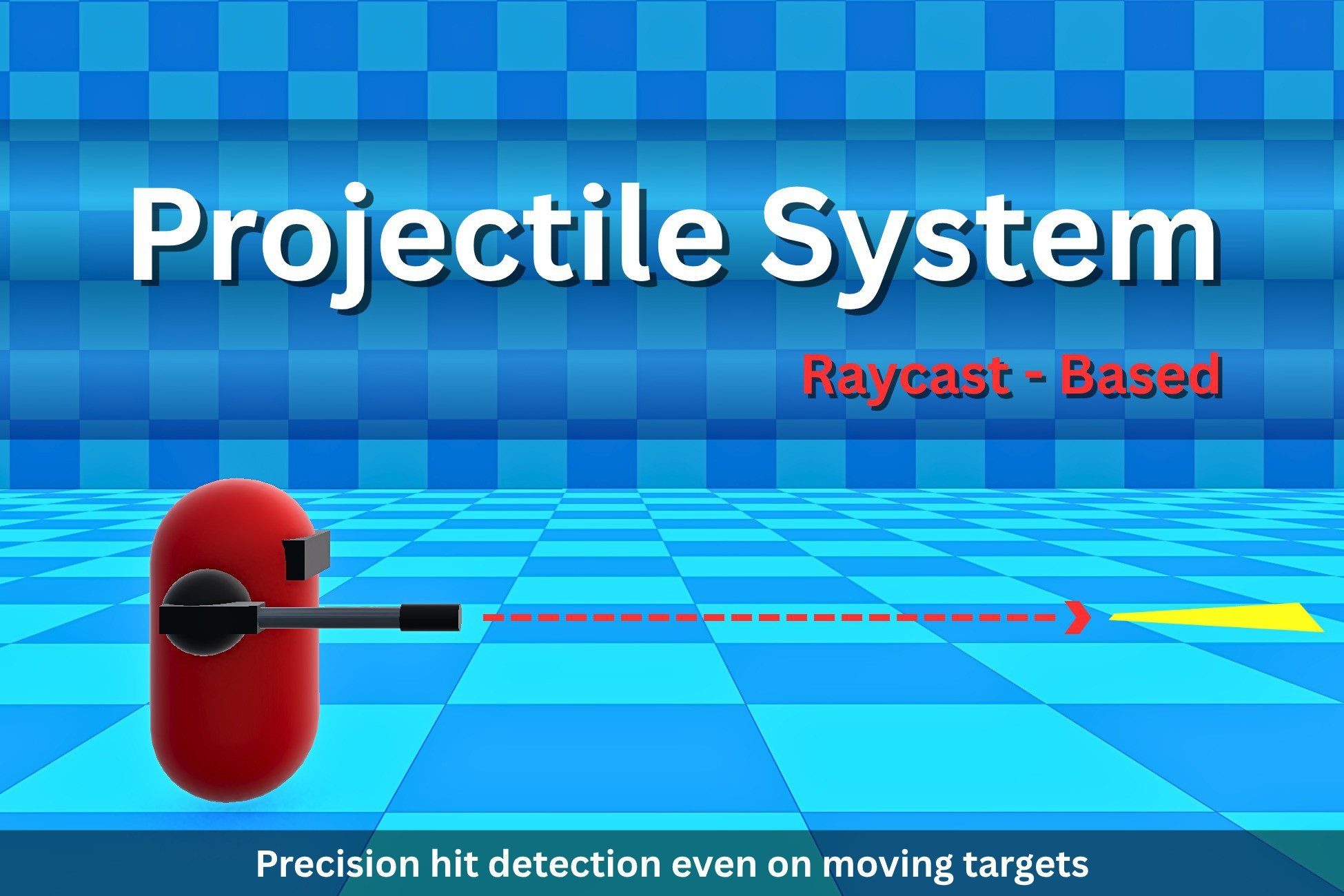
A raycast system, often referred to as hitscan, is the industry standard for fast-paced shooters like Call of Duty or Valorant. When a player pulls the trigger, the engine fires an invisible line (a ray) from the muzzle to the target point.
If that line intersects with a collider, the game registers an immediate hit. There is zero travel time.
The Advantages of Hitscan
- Performance: Raycasting is computationally inexpensive. It requires a single mathematical check rather than ongoing physics updates.
- Precision: It eliminates the need for complex “lead-the-target” mechanics, which is vital for competitive, twitch-based gameplay.
- Reliability: Because there is no travel time, you don’t have to worry about network latency issues causing “ghost bullets” that hit on the client but miss on the server.
The Limitations
The primary downside of a purely hitscan system is the lack of physical presence. Bullets don’t have weight, they don’t drop over distance, and they cannot be dodged. If your game design requires slow-moving projectiles or environmental interaction, raycasting alone will feel hollow.
<img alt="Raycast – Store" src="https://www.raycast.com/next/image?url=%2Fnext%2Fstatic%2Fmedia%2FisolatedCube.0cfa31f6.png&w=1920&q=70″ style=”max-width:100%; height:auto; border-radius:8px; margin: 1rem 0;” />
What is a Projectile System?
A projectile system involves spawning an actual object (or a physics-based entity) in the game world that travels from point A to point B. This object possesses properties like velocity, gravity, and drag.
When you see a rocket launcher or a sniper rifle with significant bullet drop in a game, you are looking at a projectile system in action.
Why Developers Choose Projectiles
- Tactical Depth: Projectiles allow for projectile-time, bullet drop, and travel time. This forces players to predict enemy movement, adding a layer of skill-based mastery.
- Visual Feedback: Players can see their shots, which creates a more immersive experience, especially in games with long-range combat.
- Interaction: Projectiles can be intercepted, deflected, or destroyed in mid-air, opening up new gameplay mechanics like “point defense” systems.
The Challenges of Physics Simulation
The biggest hurdle with projectiles is network synchronization. If a projectile moves too fast, it might skip over thin colliders (a phenomenon known as “tunneling”). Developers must implement Continuous Collision Detection (CCD), which is significantly more taxing on the CPU than simple raycasting.
The Hybrid Approach: The Best of Both Worlds?
Many top-tier developers in 2026 are moving toward a hybrid bullet system. This approach provides the responsiveness of a hitscan system with the visual fidelity of a projectile system.
How it works:
- Instant Detection: When the player fires, the game performs an immediate raycast to determine if a hit would have occurred.
- Visual Proxy: Simultaneously, the game spawns a “visual bullet” (a cosmetic projectile) that travels through the air to provide the player with visual feedback.
- The “Fake” Projectile: Because the damage was already calculated via the raycast, the projectile is purely aesthetic. This eliminates the “bother” of enemies reacting before the visual projectile hits, as the damage is applied at the instant of the click.
Making the Final Decision
When deciding which system to implement for your 2026 project, ask yourself these three questions:
- Is your game competitive? If yes, prioritize raycasting to ensure fair play and low latency.
- Does your game feature long-range sniping? If yes, consider a hybrid system to allow for realistic bullet drop without sacrificing hit registration.
- Are you building a platformer or fantasy game? If yes, projectiles are likely the better choice, as they allow for dodge mechanics and slower, more readable combat patterns.
Conclusion
The debate regarding projectile vs raycast systems explained boils down to the needs of your player base. Raycasting offers the ultimate in speed and reliability, while projectiles offer the ultimate in realism and tactical depth. By leveraging a hybrid approach, you can provide the best of both worlds, ensuring your 2026 title feels snappy, responsive, and physically grounded.
Choose the mechanic that serves your gameplay loop, and don’t be afraid to mix and match technologies to achieve that perfect “feel.”