
In the high-stakes world of competitive gaming, few things are as frustrating as watching a rocket or arrow sail through an enemy, only for the game to register a complete miss. As we move through 2026, developers have pushed graphical fidelity and physics engines to new heights, yet the inconsistency of projectile weapons remains a persistent pain point for players.
Whether you are playing a hyper-realistic military sim or a fast-paced arena shooter, the feeling of “ghosting” shots is universal. Understanding why this happens requires looking past the visual spectacle and into the complex marriage of network latency, server-side validation, and client-side interpolation.
The Physics of “Ghost” Shots
At the core of the issue is the difference between hitscan and projectile physics. Hitscan weapons are instantaneous; they draw a line from your crosshair to the target, checking for a collision instantly. Projectiles, however, exist as independent objects in the game world that must travel through 3D space.
When your projectile takes time to reach its destination, the game engine must account for the movement of both the shooter and the target over a duration of time. If your frame rate drops, or the server’s “tick rate” is too low, the game may fail to calculate the intersection of those two hitboxes correctly. This leads to the infamous “I clearly hit him!” moment that defines the projectile experience.
The Role of Network Latency and Tick Rates
In 2026, even with advanced fiber-optic connections, network jitter is the enemy of projectile accuracy. Every shot you take must be sent to the server, processed, and then broadcast back to other players.
- Server Tick Rate: If a server operates at 64Hz or lower, it only updates the positions of objects 64 times per second. A fast-moving projectile might pass through an enemy hitbox between these ticks, resulting in a “no-reg.”
Interpolation Delays: To make movement look smooth, games delay the world state by a few milliseconds. This means you are often shooting at where a player was* a fraction of a second ago, rather than where they currently are.
- Packet Loss: Even 1% packet loss can cause your client to lose track of the projectile’s trajectory, leading to visual desync where the bullet appears to hit on your screen but misses on the server.
Visual vs. Mechanical Fidelity
We often demand Ultra HD aesthetics and high-fidelity animations, but these can sometimes mask the underlying mechanical truth of the game. When a game features beautiful, high-resolution particle effects, it can be difficult to tell exactly where the “hitbox” of your projectile actually is.
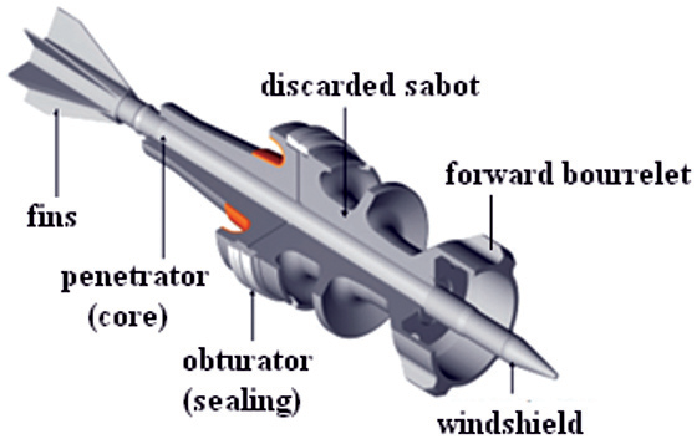
Many modern engines use hitbox expansion to compensate for latency, but this creates its own set of inconsistencies. If your projectile is visually smaller than the hitbox it is supposed to hit, you might experience “edge-case” misses where the projectile clips the model visually but fails to trigger the collision detection logic.
How Developers Mitigate Inconsistency
In 2026, top-tier developers are employing more sophisticated lag compensation algorithms. These systems keep a “history buffer” of player positions, allowing the server to look back in time and verify if your shot hit the target as it appeared on your screen.

However, this comes with a trade-off: Favor the Shooter vs. Favor the Victim. If the game favors the shooter too heavily, you get “dying behind cover” scenarios. If it favors the victim, you get inconsistent projectile behavior. Finding the “Golden Ratio” of latency compensation is the holy grail for FPS developers today.
Tips to Improve Your Projectile Accuracy
While the engine might have its flaws, you can optimize your setup to minimize these issues:
- Hardwire Your Connection: Never rely on Wi-Fi for competitive FPS games; Ethernet is the only way to ensure consistent packet delivery.
- Match Your Refresh Rate: Ensure your monitor’s refresh rate is synced with your game’s frame rate to reduce input lag, which directly affects your ability to lead targets.
- Learn the “Netcode” Feel: Every game has a different “feel” for projectile travel. Spend time in training modes to understand how much you need to lead targets based on your ping.
Conclusion
The inconsistency of projectile weapons is not usually a result of “bad code,” but rather the immense technical challenge of synchronizing high-speed objects across a global, unstable network. As we look ahead, improved server hardware and more aggressive predictive algorithms will continue to bridge the gap between what you see and what the server records.
For now, players must balance their expectations. Understanding that projectile weapons require a deeper understanding of latency, lead-time, and server tick rates is the first step toward mastering them. Even with the best gear, the game of cat-and-mouse between your bullet and the enemy’s hitbox remains one of the most complex technical feats in modern gaming.