The global business landscape in 2026 has shifted dramatically. We are no longer in an era where data is merely a "nice-to-have" luxury reserved for tech giants with dedicated data science teams. Today, data is the new currency, and for small businesses, it is the single most critical factor separating thriving enterprises from those that struggle to survive. Recent projections estimate the global data analytics market will reach $132.9 billion by 2026, expanding at a staggering CAGR of 30.08%. Yet, despite this proven impact, a startling only 24% of small businesses consider themselves truly "data-driven."
This disconnect represents a massive opportunity. While large corporations wrestle with complex legacy systems, agile small businesses can leverage easy analytics tools to make faster, smarter decisions. Companies that base their decision-making on robust data analytics have seen their productivity increase by 63%. In 2026, the barrier to entry has never been lower. With the rise of AI-powered platforms, intuitive drag-and-drop interfaces, and affordable cloud solutions, turning raw numbers into actionable growth strategies is now accessible to every entrepreneur. This guide explores the best tools, practical tips, and strategic insights to help your small business harness the power of data immediately.
Why Data Analytics is Non-Negotiable for Small Businesses in 2026
Gone are the days when small business owners could rely solely on gut instinct or basic spreadsheet tracking. The complexity of modern consumer behavior, supply chain volatility, and digital marketing channels demands a more sophisticated approach. In 2026, data analytics serves as the compass that guides every aspect of a small business, from inventory management to customer retention.
Enhanced Decision-Making Speed and Accuracy
One of the primary benefits of adopting analytics tools is the drastic improvement in decision-making velocity. Traditional methods often involve waiting for end-of-month reports, by which time opportunities may have vanished. Modern real-time reporting allows business owners to see sales trends, website traffic spikes, and ad performance instantly. This immediacy enables proactive adjustments rather than reactive damage control. When you can identify a underperforming product line within hours instead of weeks, you save thousands in wasted inventory costs.
Operational Efficiency and Cost Reduction
Small businesses operate on thin margins, making efficiency paramount. Data analytics tools highlight inefficiencies that are often invisible to the naked eye. Whether it is identifying supply chain bottlenecks, spotting underperforming employees, or detecting wasteful spending in marketing campaigns, data provides the evidence needed to streamline operations. By addressing these specific areas, businesses can significantly reduce overhead costs and improve their bottom line without sacrificing quality.
Deep Customer Understanding and Personalization
In an era where customers expect hyper-personalized experiences, understanding your audience is key to survival. Analytics tools allow small businesses to dive deep into customer preferences, buying patterns, and feedback loops. Instead of guessing what your customers want, you can tailor your offerings based on hard data. For instance, knowing exactly which products are frequently bought together allows for smarter cross-selling strategies, while analyzing churn rates helps in crafting targeted retention campaigns. This level of insight builds stronger relationships and fosters brand loyalty.
Top Easy Analytics Tools for Small Businesses in 2026
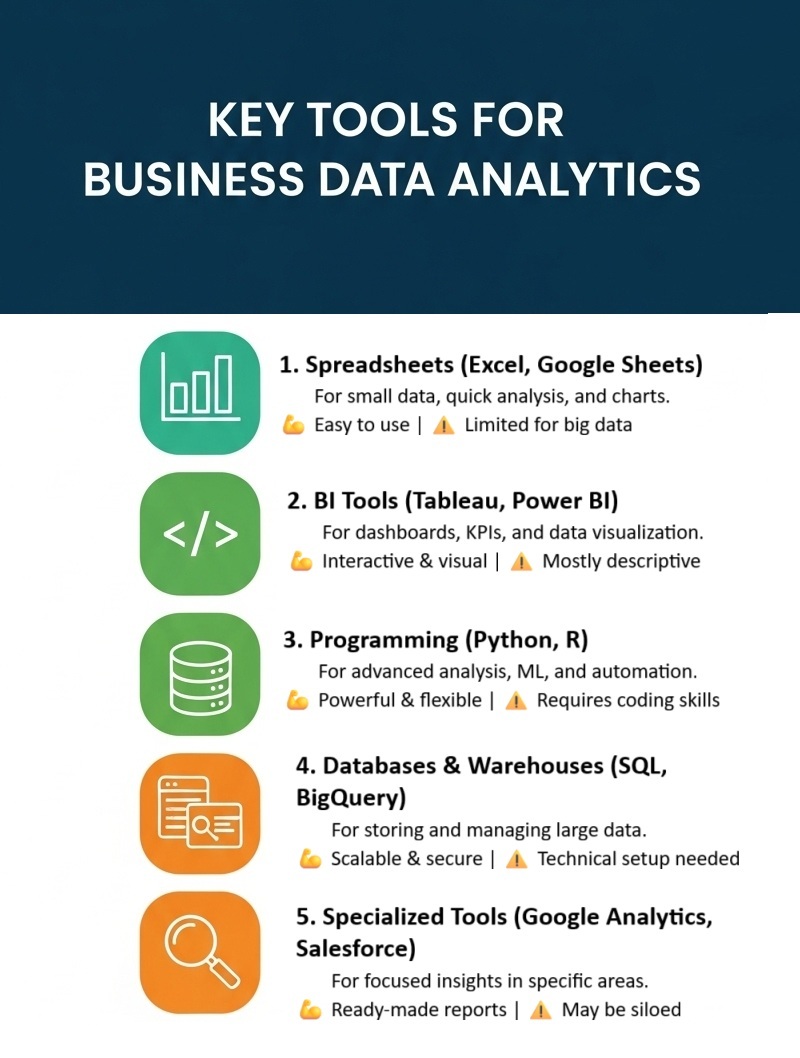
Choosing the right tool is critical. The market is flooded with options, but not all are created equal for small business needs. The ideal solution must be user-friendly, affordable, and capable of seamless integration with existing workflows. Based on extensive research and testing for the 2026 landscape, here are the top contenders that deliver immediate ROI without requiring a data science degree.
Google Analytics 4 (GA4): The Essential Free Foundation
For any business with an online presence, Google Analytics 4 remains the gold standard for free web analytics. In 2026, GA4 has matured into a powerful engine that goes beyond simple page views. It offers advanced event-based tracking, allowing businesses to monitor specific user interactions like video plays, file downloads, and form submissions.
- Key Benefit: Completely free with robust features for tracking website performance.
- Best For: Understanding website traffic sources, user behavior, and conversion paths.
- Limitation: Primarily focused on web data; requires integration with other tools for a holistic business view.
Zoho Analytics: The Affordable All-in-One Powerhouse
Zoho Analytics has emerged as a favorite for small businesses seeking a comprehensive yet budget-friendly solution. It acts as a true all-in-one platform, connecting data from over 500+ integrations, including CRMs, accounting software, and social media platforms. Its standout feature in 2026 is its AI assistant, which allows users to ask questions in natural language and receive instant visual answers.
- Key Benefit: Extremely affordable pricing with enterprise-grade features like predictive analytics.
- Best For: Businesses needing unified reporting across multiple data sources without high costs.
- Ease of Use: Designed specifically for business users with minimal technical skills required.
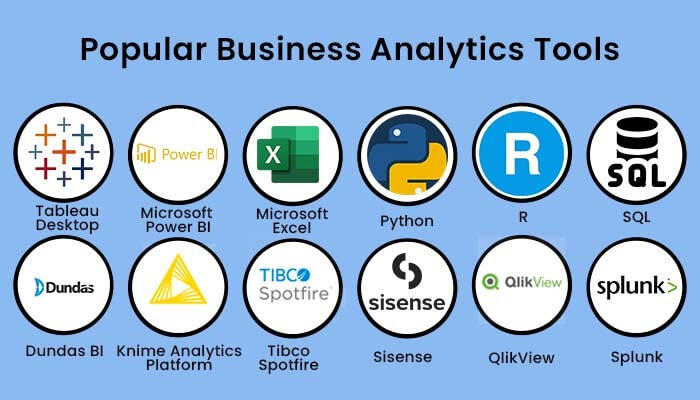
Microsoft Power BI: Seamless Integration for Microsoft Users
If your small business already relies on the Microsoft ecosystem (Office 365, Excel, Azure), Microsoft Power BI is the logical choice. It transforms familiar Excel spreadsheets into interactive, dynamic dashboards. In 2026, Power BI has enhanced its AI capabilities, offering automated insights that highlight anomalies and trends automatically.
- Key Benefit: Deep integration with Microsoft products makes data import effortless.
- Best For: Teams comfortable with Microsoft tools who need scalable business intelligence.
- Pricing: Starts at a very accessible $10 per user/month, making it viable for small teams.
Looker Studio: Free Cloud-Based Visualization
Formerly known as Google Data Studio, Looker Studio remains a top choice for creating beautiful, shareable reports without any cost. It connects natively with Google services like Ads, Sheets, and Analytics, making it perfect for marketing agencies and e-commerce stores. The 2026 updates have improved its drag-and-drop interface, making dashboard creation faster and more intuitive than ever.
- Key Benefit: Free to use with excellent visualization capabilities.
- Best For: Marketing teams needing to visualize campaign performance and share reports with clients.
- Scalability: Great for starting out, though complex data modeling may require paid upgrades later.
Mixpanel: Advanced Product and User Analytics
For SaaS companies and app-based businesses, Mixpanel offers unparalleled depth in tracking user behavior. Unlike traditional web analytics, Mixpanel focuses on event tracking and user journeys, helping businesses understand how users interact with their product over time. Its cohort analysis features are essential for identifying retention issues and optimizing the user experience.
- Key Benefit: Specialized focus on product usage and user engagement metrics.
- Best For: Tech startups and app developers looking to optimize product-market fit.
- Insight: Provides clear visibility into where users drop off in the funnel.
ToolJet: AI-Powered Custom Analytics
A rising star in 2026 is ToolJet, an open-source low-code platform that allows businesses to build custom analytics tools tailored to their specific needs. With its AI-powered development features, non-technical users can create full-stack applications and dashboards that connect to various databases and APIs.
- Key Benefit: True customization without the high cost of hiring developers.
- Best For: Businesses with unique data requirements that off-the-shelf tools cannot meet.
- Control: Offers enterprise-grade governance and security from day one.
Strategic Tips for Implementing Analytics Without Overwhelm
Having the right tools is only half the battle. Many small businesses fail because they try to do too much too soon, leading to "analysis paralysis." To succeed in 2026, you need a strategic approach that prioritizes actionable insights over vanity metrics.
Start with Clear Business Questions
Before diving into dashboards, define what you actually need to know. Are you trying to reduce customer churn? Increase average order value? Optimize ad spend? Start with three to five key questions that directly impact your revenue or efficiency. Build your analytics setup around answering these specific questions. This focused approach prevents you from getting lost in a sea of irrelevant data.
Prioritize Data Hygiene and Integration
Garbage in, garbage out. The accuracy of your insights depends entirely on the quality of your data. Ensure that your data sources are clean and consistent. In 2026, the best practice is to use tools that offer automated data integration. Platforms like Zoho Analytics and Power BI can pull data from your CRM, email marketing software, and accounting system into a single source of truth. This eliminates manual entry errors and ensures your reports are always up to date.
Focus on Actionable Metrics, Not Vanity Metrics
It is easy to get distracted by metrics that look good but mean little, such as total page views or social media likes. Instead, focus on Key Performance Indicators (KPIs) that drive business outcomes.
- Conversion Rate: The percentage of visitors who take a desired action.
- Customer Acquisition Cost (CAC): How much you spend to gain a new customer.
- Lifetime Value (LTV): The total revenue expected from a single customer.
- Churn Rate: The percentage of customers who stop doing business with you.
By monitoring these core metrics, you can make decisions that directly influence your profitability.
Leverage AI for Predictive Insights
In 2026, you don't need to be a data scientist to access predictive analytics. Many modern tools come with built-in AI that can forecast future trends based on historical data. Use these features to anticipate demand surges, predict cash flow issues, or identify customers at risk of churning. Let the AI handle the heavy lifting of pattern recognition so you can focus on strategy.
Create a Culture of Data Literacy
Data analytics shouldn't be siloed in one department. Encourage your entire team to engage with the data. Share dashboards regularly in team meetings and train staff on how to interpret the numbers. When everyone understands the metrics that matter, the whole organization becomes more aligned and efficient. A data-driven culture empowers employees to make better decisions in their daily roles.
Navigating the Challenges: Privacy, Cost, and Complexity
While the benefits are immense, small businesses must also navigate certain challenges when implementing analytics. Addressing these proactively ensures long-term success and compliance.
Data Privacy and Compliance
With regulations like GDPR and CCPA becoming stricter globally, data privacy is paramount. In 2026, consumers are more aware of their data rights than ever before. Ensure that your analytics tools are compliant with current privacy laws. Look for features like IP anonymization, consent management integration, and secure data storage. Transparency with your customers about how you use their data builds trust and protects your brand reputation.
Managing Costs Effectively
Analytics tools can range from free to expensive enterprise solutions. It is crucial to choose a tool that fits your current budget while allowing for scalability. Many small businesses start with free tiers like Google Analytics or Looker Studio and upgrade as their needs grow. Avoid overpaying for features you won't use. Regularly review your subscription costs and ensure the ROI justifies the expense. Remember, the goal is cost efficiency, not just having the most expensive tool.
Overcoming the Technical Learning Curve
The fear of complexity often stops small business owners from adopting analytics. However, the trend in 2026 is towards no-code and low-code solutions. Tools are increasingly designed with intuitive interfaces that require no coding knowledge. Take advantage of free tutorials, webinars, and customer support offered by these platforms. Start small, master one tool, and then gradually expand your toolkit. The investment in learning pays off exponentially in improved decision-making.
FAQ: Common Questions About Small Business Analytics
Q: What are the best data analytics tools for small business in 2026?
A: The top choices depend on your specific needs, but leading options include Google Analytics 4 for web traffic, Zoho Analytics for affordable all-in-one reporting, Microsoft Power BI for deep business intelligence, Looker Studio for free visualization, and Mixpanel for product-focused insights. For custom needs, ToolJet is gaining popularity for its AI-powered flexibility.
Q: How much should a small business budget for data analytics tools?
A: Budgets vary widely. Many successful small businesses start with free tools ($0/month) and scale up. Typically, small businesses spend between $50 and $500 per month on analytics software. Entry-level paid plans often start around $10-$20 per user/month, while comprehensive platforms may cost $50-$100 per month. The key is to align spending with the value generated.
Q: Do small businesses really need data analytics tools?
A: Absolutely. In the competitive 2026 market, operating without data is akin to flying blind. Data analytics transforms raw information into actionable insights, enabling better decision-making, improved operational efficiency, and enhanced customer experiences. Businesses that leverage data see significant productivity gains and cost reductions compared to those relying on intuition alone.
Q: Can I use analytics tools without a dedicated data analyst?
A: Yes. Modern analytics tools are specifically designed for non-technical users. Features like drag-and-drop builders, pre-built templates, and AI assistants allow founders, marketers, and operators to generate insights without coding or statistical expertise. The barrier to entry has never been lower.
Q: How do I choose the right analytics tool for my business?
A: Evaluate tools based on ease of use, integration capabilities with your existing software, scalability, and pricing. Consider your team's technical skills and the specific questions you need to answer. Start with a tool that solves your most pressing problem today, then expand as your data maturity grows.
Conclusion: The Future is Data-Driven
As we move further into 2026, the divide between data-driven small businesses and those that lag behind will only widen. The tools available today are more powerful, accessible, and affordable than ever before. By embracing easy analytics tools and adopting a strategic approach to data, small businesses can unlock unprecedented growth opportunities.
The journey begins with a single step: choosing the right tool and asking the right questions. Whether you opt for the robustness of Power BI, the affordability of Zoho Analytics, or the simplicity of Google Analytics, the key is to start now. Don't let your data sit idle in spreadsheets. Transform it into your greatest asset. In a world where 63% productivity increases are possible through data, ignoring analytics is a risk no small business can afford to take. Embrace the data revolution, make informed decisions, and propel your business toward a prosperous future.
References
- Best 16 Data Analytics Tools for Small Businesses in 2026 Publication — Comprehensive evaluation of top analytics platforms and market trends, 2026
- DataWorkGear Staff — Best Data Analytics Tools for Small Business: 8 Top Solutions for 2026, 2026
- Alexia.ai Blog — Easy to Use Analytics Tools for Small Business in 2026: Affordable and Powerful Platforms, 2026
- Outsourcing Buddy — Top 10 Effective Data Analytics Tools for Small Businesses: A Strategic Guide, 2026
- FineReport Resources — 10 best business analytics softwares for small businesses in 2026, 2026
- IBM Survey Data — Global Small Business Data-Driven Adoption Statistics, 2026
- Market Research Projections — Global Data Analytics Market Growth and CAGR Analysis, 2026